
July 22, 2026

— 9 Minute · July 22, 2026
French Technique, Moroccan Soul: Where Two Traditions Meet
Confit and m'chermel. Roux and smen. Braise and tagine. The culinary overlap between France and Morocco runs deeper than colonial history — it is a conversation between two of the world's great kitchen traditions.
The first thing to understand about French and Moroccan cuisine is that they share more than either tradition is typically willing to admit. This is not a comfortable observation. The culinary relationship between France and Morocco is inseparable from the colonial one — France's protectorate over Morocco lasted from 1912 to 1956, and the cultural exchange that occurred during those decades was neither equal nor voluntary. But food, as it so often does, moved in directions that politics could not fully control. Techniques traveled. Ingredients crossed borders. And in the kitchens of both countries, something happened that was more interesting than simple imposition or resistance: a conversation.
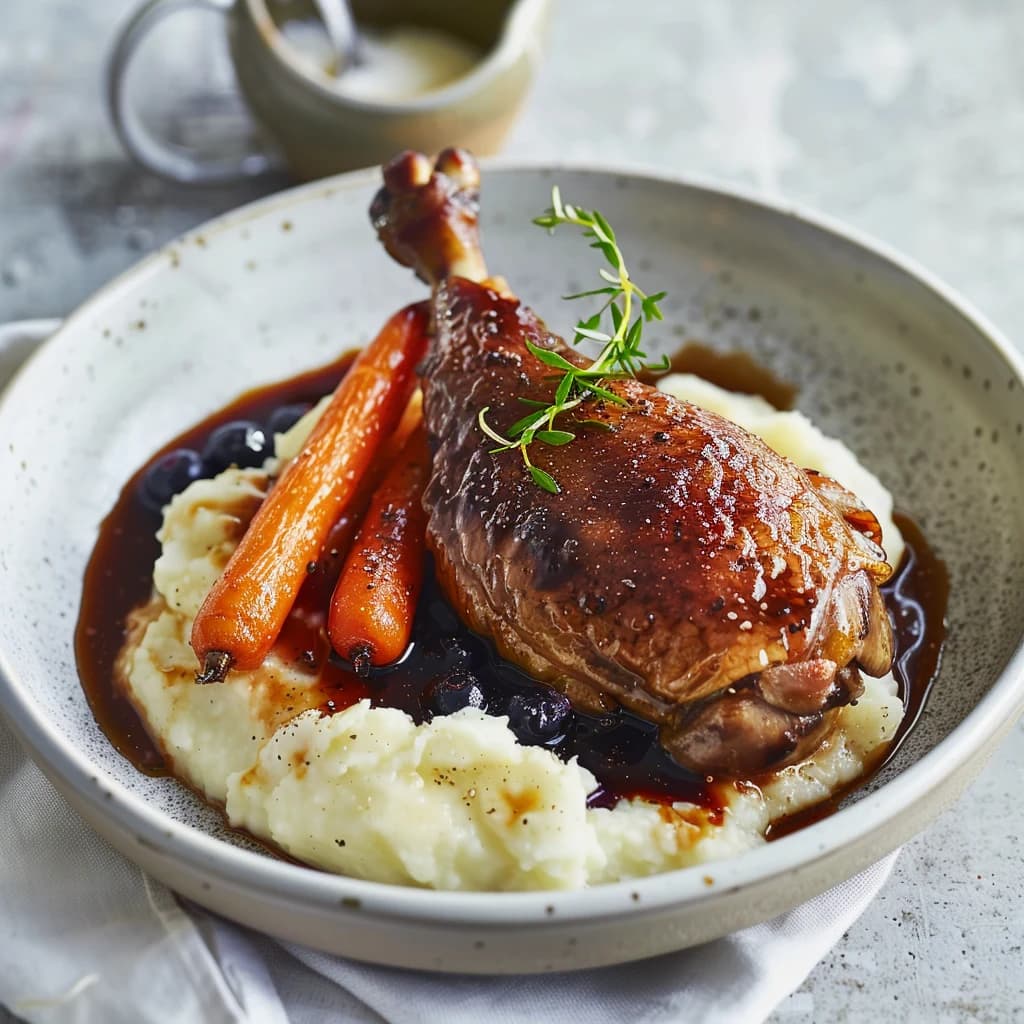
The parallels begin with preservation. The French confit — duck legs slow-cooked in their own rendered fat until the meat is silky and falling from the bone, then stored submerged in that fat — is one of the cornerstones of Gascon cooking, a technique born from the practical need to preserve meat before refrigeration. Moroccan m'chermel operates on a nearly identical principle: meat, usually chicken or lamb, is cooked slowly in a mixture of olive oil, preserved lemon, and spices, the fat and acid acting as both cooking medium and preservative. The result in both cases is meat that is impossibly tender, deeply flavored, and suffused with the fat that surrounds it. The technique is the same. The flavor profiles diverge — duck fat and thyme versus olive oil and ras el hanout — but the underlying culinary logic is shared.

Rachel Laudan, the food historian whose Cuisine and Empire traces the global movement of cooking traditions through trade, empire, and migration, argues that these parallels are not coincidental. Both French and Moroccan cuisines descend, in part, from the broader Mediterranean tradition of fat-based cooking and slow braising that has been practiced around that sea for thousands of years. The Romans braised in olive oil. The medieval Arabs refined spice-based cookery and introduced it to North Africa and the Iberian Peninsula. The French codified their techniques during the era of Careme and Escoffier. But the root practices — building flavor through the slow application of heat and fat — are ancient and shared.
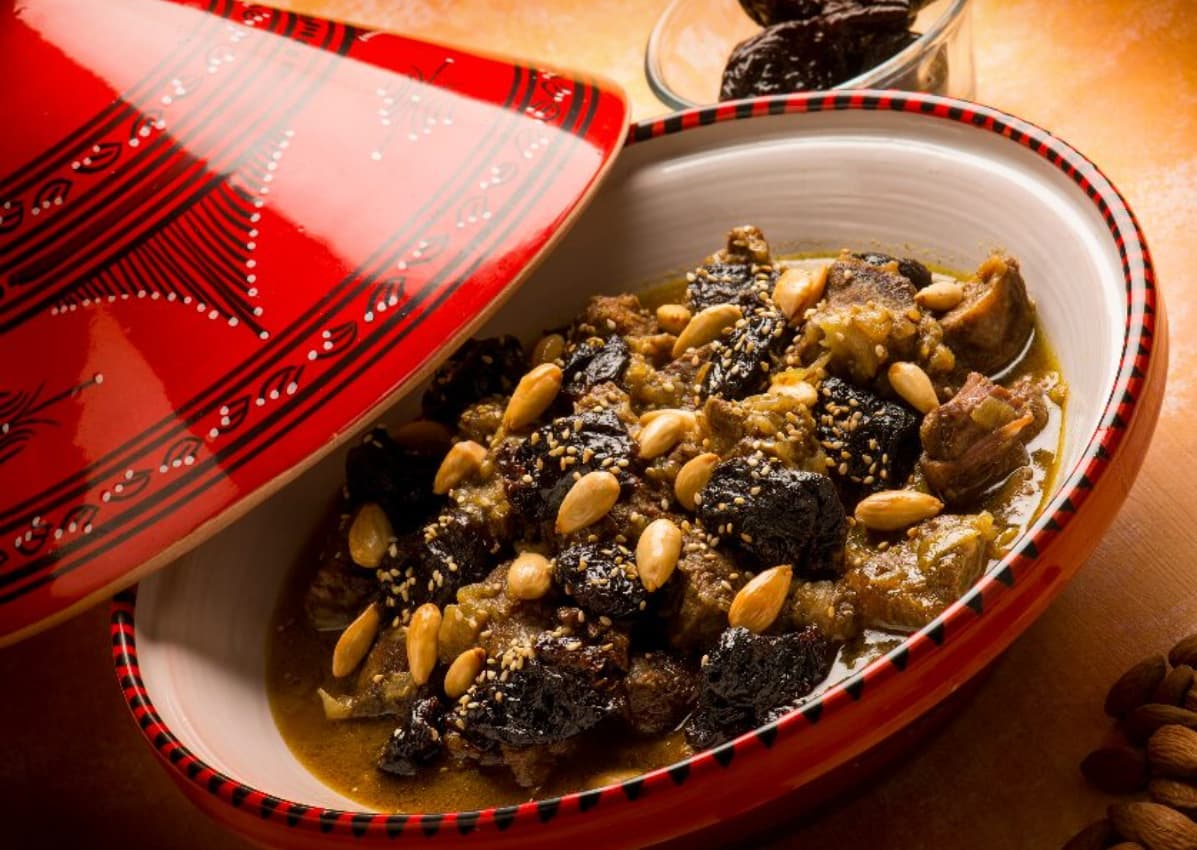
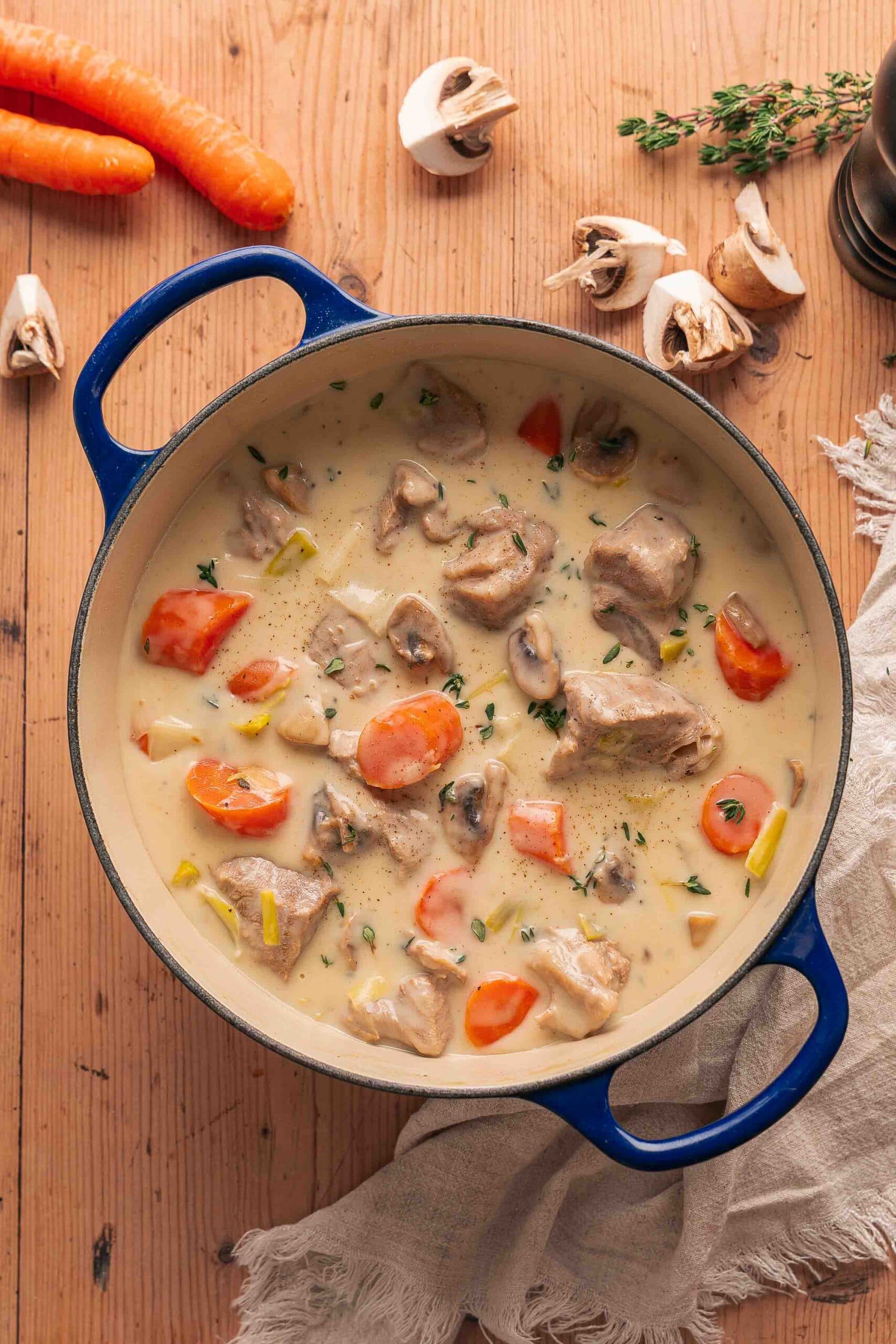
The roux, that foundational French mixture of fat and flour cooked together to thicken sauces, has an interesting Moroccan counterpart in the use of smen — aged, fermented butter with a pungent, cheese-like flavor that serves as both a cooking fat and a finishing element. Smen does not thicken in the way a roux does, but it serves an analogous structural purpose: it provides body, richness, and a depth of flavor that ties a dish together. In a blanquette de veau, the classic French veal stew, a white roux enriched with cream creates a sauce of ethereal smoothness. In a Moroccan lamb tagine finished with a spoonful of smen, the fermented butter performs a similar act of enrichment, adding a savory complexity that rounds out the spice.
Mourad Lahlou, who trained in both Moroccan and French kitchens before opening his restaurants in San Francisco, has spent his career navigating this intersection. He has spoken about the discomfort of being a Moroccan chef working within French technique — the awareness that the French culinary establishment historically treated North African cuisine as peasant food, unworthy of serious study, even while French home cooks in Morocco were quietly absorbing Moroccan flavors and techniques. Lahlou's cooking resolves this tension not by choosing one tradition over the other but by demonstrating that they are, at the level of technique, more similar than different. His tagines are precise. His spice work is calibrated with French rigor. His presentations borrow from the visual grammar of haute cuisine. The result is food that belongs fully to both traditions and exclusively to neither.

The legacy of Joel Robuchon, the French chef who held more Michelin stars than any other before his death in 2018, offers another lens. Robuchon, who was known for his obsessive precision and his famous pommes puree — mashed potatoes enriched with an almost absurd quantity of butter — represented the apex of French technique: the idea that perfection in cooking is achieved through the relentless refinement of a small number of methods. This philosophy has deep resonance with Moroccan cooking, where a master cook may spend a lifetime perfecting a single tagine, adjusting the spice balance, the cooking time, and the sauce reduction by increments so small they are invisible to anyone but the cook. The pursuit of perfection through repetition is a value both traditions share.
Claudia Roden, the Egyptian-born food writer whose books on Middle Eastern and Mediterranean cooking have done more than perhaps any others to bring these cuisines to English-speaking audiences, has written about the Moroccan kitchen with a specificity that reveals its technical sophistication. She describes the layering of flavors in a tagine — onions cooked until melting, spices bloomed in oil, meat seared and then braised, preserved lemons and olives added at precise intervals — as a process no less rigorous than the construction of a French sauce. The difference is that the French tradition codified its techniques in writing, beginning with La Varenne in the seventeenth century and continuing through Escoffier, while the Moroccan tradition transmitted its knowledge orally, through generations of women whose expertise was no less real for being unwritten.
This asymmetry of documentation has had lasting consequences. French cuisine is taught in culinary schools worldwide because it was written down — standardized, systematized, and exported as a professional curriculum. Moroccan cuisine, until relatively recently, was not part of that curriculum, not because it lacked technique but because it lacked the institutional infrastructure of cookbooks, schools, and professional organizations that the French system developed over centuries. The result is a persistent bias in the professional culinary world: French technique is treated as universal, a foundation upon which all other cuisines are built, while Moroccan technique is treated as regional, specific, and implicitly less rigorous.

This framing is being challenged by a generation of chefs who move between both traditions. In Marrakech, young cooks trained in French methods are reopening traditional riads and serving updated versions of Moroccan classics with a technical precision that reflects their training. In Paris, North African chefs are earning recognition in the French fine-dining establishment — a development that would have been nearly unthinkable a generation ago. And in cities like Boston, New York, and San Francisco, chefs with roots in both traditions are cooking food that refuses to be categorized as either French or Moroccan, drawing on both vocabularies to create something new.
The private dining context is particularly well-suited to this kind of synthesis. Freed from the constraints of a restaurant menu that must be legible to a broad audience, a private chef can design a meal that moves fluidly between traditions: a French amuse-bouche of duck confit on a bed of lentils, followed by a Moroccan lamb tagine with preserved lemon and olives, followed by a dessert that uses French pastry technique to encase Moroccan flavors — orange blossom, almond, honey. The table itself can reflect the fusion: French linens, Moroccan tea glasses, candles in both traditions.
The deeper point is that culinary traditions are not sealed containers. They are ongoing conversations, influenced by geography, trade, migration, and the simple human tendency to adopt good ideas from whoever happens to be cooking next door. France and Morocco have been cooking next door to each other — literally, across the Mediterranean, and figuratively, through decades of shared history — for long enough that the boundary between the two traditions is more porous than it appears.
What emerges from that porosity is not a dilution of either tradition but an enrichment of both. The French emphasis on technique and precision sharpens Moroccan cooking. The Moroccan emphasis on spice, generosity, and communal dining warms French cooking. Between the two, there is space for a cuisine that honors both — that is as disciplined as a consomme and as generous as a tagine, as precise as a brunoise and as soulful as a pot of harira on a cold evening.
The conversation between these two traditions is not finished. It may never be. And that is precisely what makes it worth having.
— More to read

— 10 Minute · Article
Ramadan at the Table: The Foods That Break the Fast
When the sun sets during the holy month, the first bite is never random. Across the Muslim world, iftar follows a structure as precise as the fast itself, shaped by centuries of nutritional wisdom, religious practice, and culinary tradition.

— 10 Minute · Article
Liquid Gold: What Most People Get Wrong About Olive Oil
The bottle in your pantry is almost certainly not what it claims to be. The olive oil industry is plagued by fraud, misunderstanding, and a chemical complexity that most consumers never encounter. Here is what actually matters.

— 11 Minute · Article
The Tagine: A Vessel Shaped by Centuries
Long before Dutch ovens or pressure cookers, Berber cooks in North Africa perfected a conical clay vessel that turns scarce water and low heat into extraordinary depth of flavor — and modern food science is only now explaining why.

— 12 Minute · Article
Preserved Lemons — The Science, the Tradition, and the Three Weeks That Change Everything
Salt, citrus, time. Inside the Moroccan pantry staple that food scientists and chefs across three continents consider irreplaceable.

— 14 Minute · Article
The Lobster Chapter — From Trap to Table on the New England Coast
How a cold-water crustacean became the centerpiece of New England identity — and what most people still get wrong about cooking it.

— 9 Minute · Article
The Private Chef Question: What Happens When Dinner Is the Event
Private dining is booming. But the shift from restaurant kitchen to someone's home changes everything — the menu, the service, the relationship between chef and guest. Inside the quiet rise of dinner as experience.
— 9 Minute · Article
The Table Is the Thing: Why Setting Matters as Much as Cooking
A perfectly cooked dish served on the wrong plate, in the wrong light, at the wrong height, loses something essential. The art of table setting is not decoration — it is the final act of cooking.

— 9 Minute · Article
Sourcing in New England: A Chef's Guide to the Local Supply Chain
Between the Boston Fish Pier and the winter CSA box, New England's food supply chain is more complex — and more fragile — than most diners realize. A practical look at what local actually means.

— 8 Minute · Article
The Grandmother Test: When a Recipe Is Actually Done
She never set a timer. She listened to the tagine, pressed the dough, smelled the bread. The unwritten knowledge of grandmothers is the most valuable — and most endangered — form of culinary intelligence.

— 9 Minute · Article
On Bread: The Oldest Recipe in the World
From Moroccan khobz baked in communal ovens to the exacting crumb of a French baguette, bread remains the one recipe every civilization shares. A look at the science, history, and quiet revolution happening in flour and water.