
May 15, 2026

— 10 Minute · May 15, 2026
Liquid Gold: What Most People Get Wrong About Olive Oil
The bottle in your pantry is almost certainly not what it claims to be. The olive oil industry is plagued by fraud, misunderstanding, and a chemical complexity that most consumers never encounter. Here is what actually matters.
There is a scandal sitting in nearly every kitchen cabinet in America, and it tastes like nothing. That is the problem. Most consumers have never tasted real extra virgin olive oil, which means they have no reference point for recognizing the imitation. The bottle labeled "extra virgin" that has been sitting next to the stove for six months, exposed to heat and light, purchased for four dollars at a grocery chain, is almost certainly not extra virgin in any meaningful sense. It may never have been.
Tom Mueller spent years investigating the olive oil industry for his book Extra Virginity: The Sublime and Scandalous World of Olive Oil, and what he found was an industry riddled with adulteration, mislabeling, and outright fraud at a scale that dwarfs most food scandals. Mueller documented cases of oils cut with cheaper seed oils, chemically deodorized lampante oil (a grade technically unfit for consumption) being relabeled and sold as extra virgin, and a supply chain so opaque that tracing a bottle back to its actual origin was often impossible.
The problem begins with the term itself. "Extra virgin" is a chemical and sensory designation, not a marketing phrase. To qualify, an olive oil must be mechanically extracted from olives without the use of heat or solvents, must have a free acidity level below 0.8 percent, and must pass a sensory evaluation by a trained taste panel that detects no defects. That last requirement is crucial and routinely ignored. A trained panel should find the oil to have positive attributes of fruitiness, bitterness, and pungency. Any hint of rancidity, mustiness, or vinegary fermentation disqualifies it.
Dr. Selina Wang, who directed research at the UC Davis Olive Center, led a series of studies in the early 2010s that tested supermarket olive oils against these standards. The results were damning. Across multiple studies, roughly 69 percent of imported oils labeled extra virgin failed to meet the grade, either because they had been adulterated with cheaper refined oils or because they had degraded past the point of compliance. The domestic California oils fared significantly better, but the imported oils, which dominate the American market, were failing at rates that suggested systemic problems rather than isolated incidents.
Wang's work also drew attention to the gap between what the industry tests and what consumers experience. The official standards, maintained by the International Olive Council, rely heavily on chemical analysis and panel tasting conducted at or near the point of production. By the time a bottle reaches a consumer months later, having sat in a warm warehouse, shipped across an ocean, and languished on a brightly lit grocery shelf, the oil inside has continued to degrade. Olive oil is a perishable product masquerading as a shelf-stable one.

This perishability is driven by chemistry. The compounds that make extra virgin olive oil nutritionally and gastronomically valuable, specifically the polyphenols and tocopherols, are also the compounds most vulnerable to oxidation. Polyphenols are the source of the peppery, almost aggressive bite that real extra virgin oil delivers at the back of the throat, a sensation so distinctive that tasters call it "cough." They are also potent antioxidants with documented anti-inflammatory properties. Harold McGee, in his encyclopedic On Food and Cooking, explains that these phenolic compounds begin breaking down the moment the oil is exposed to oxygen, light, and heat, the three enemies that most kitchen storage conditions provide in abundance.
The practical implications are straightforward and widely ignored. Olive oil should be purchased in dark bottles or tins, stored away from the stove, and used within a few months of opening. A harvest date on the label is more informative than a "best by" date, since the latter tells you nothing about when the olives were actually pressed. Oil from the most recent harvest will always be superior. Southern hemisphere oils from Australia, Chile, or South Africa, harvested in May and June, can be a smart choice for Northern Hemisphere consumers buying in autumn or winter, when the previous year's Mediterranean oils are already aging.
The geography of olive oil adds another layer of complexity that the industry has done little to clarify. Italy, the country most associated with olive oil in the popular imagination, is actually a net importer. Much of the oil bottled and labeled in Italy originates in Spain, Greece, Tunisia, or Turkey, where it is shipped in bulk, blended, and repackaged. This is legal under European Union regulations, provided the label accurately indicates origin, but the labeling requirements are riddled with loopholes that allow vague designations. A label reading "packed in Italy" or "imported from Italy" tells the consumer where the bottling occurred, not where the olives grew.

Spain, by contrast, produces roughly half of the world's olive oil and remains remarkably underrepresented on American shelves. The Jaen province alone, in Andalusia, produces more olive oil than the entirety of Greece. Spanish oils, particularly those from the Picual variety, tend toward higher polyphenol content and a more assertive flavor profile: greener, more bitter, with stronger peppery notes. They are, by objective chemical measures, often among the most robust and healthful oils available, and they typically cost less than their Italian-labeled counterparts.
Californian olive oil has emerged as a credible alternative over the past two decades, driven in part by the UC Davis Olive Center's research and advocacy. Producers in California operate under the stricter USDA standards and tend to offer greater transparency about harvest dates and varietals. The trade-off is price. California extra virgin oil costs more, reflecting the higher labor costs and smaller production scale. Whether the premium is justified depends on use case.
And this brings up perhaps the most contentious question in home cooking: should you cook with extra virgin olive oil, or save it for finishing? The conventional wisdom, repeated in countless cooking classes and food articles, holds that extra virgin oil's low smoke point makes it unsuitable for high-heat cooking and that its delicate flavors are destroyed by heat. Both claims are more complicated than they appear.
McGee has noted that the smoke point of extra virgin olive oil, typically cited around 375 degrees Fahrenheit, is lower than that of refined oils but well above the temperatures used in most home sauteing and roasting. The polyphenols do degrade with heat, but studies have shown that enough survive moderate cooking to deliver meaningful flavor and nutritional benefit. The greater issue is economic rather than chemical: using a twenty-dollar bottle of single-estate Tuscan oil to fry eggs is a waste not because it will taste bad, but because most of what makes that oil special will be diminished by the cooking process. A less expensive extra virgin oil for cooking and a high-quality one for finishing is the approach that makes the most sense.
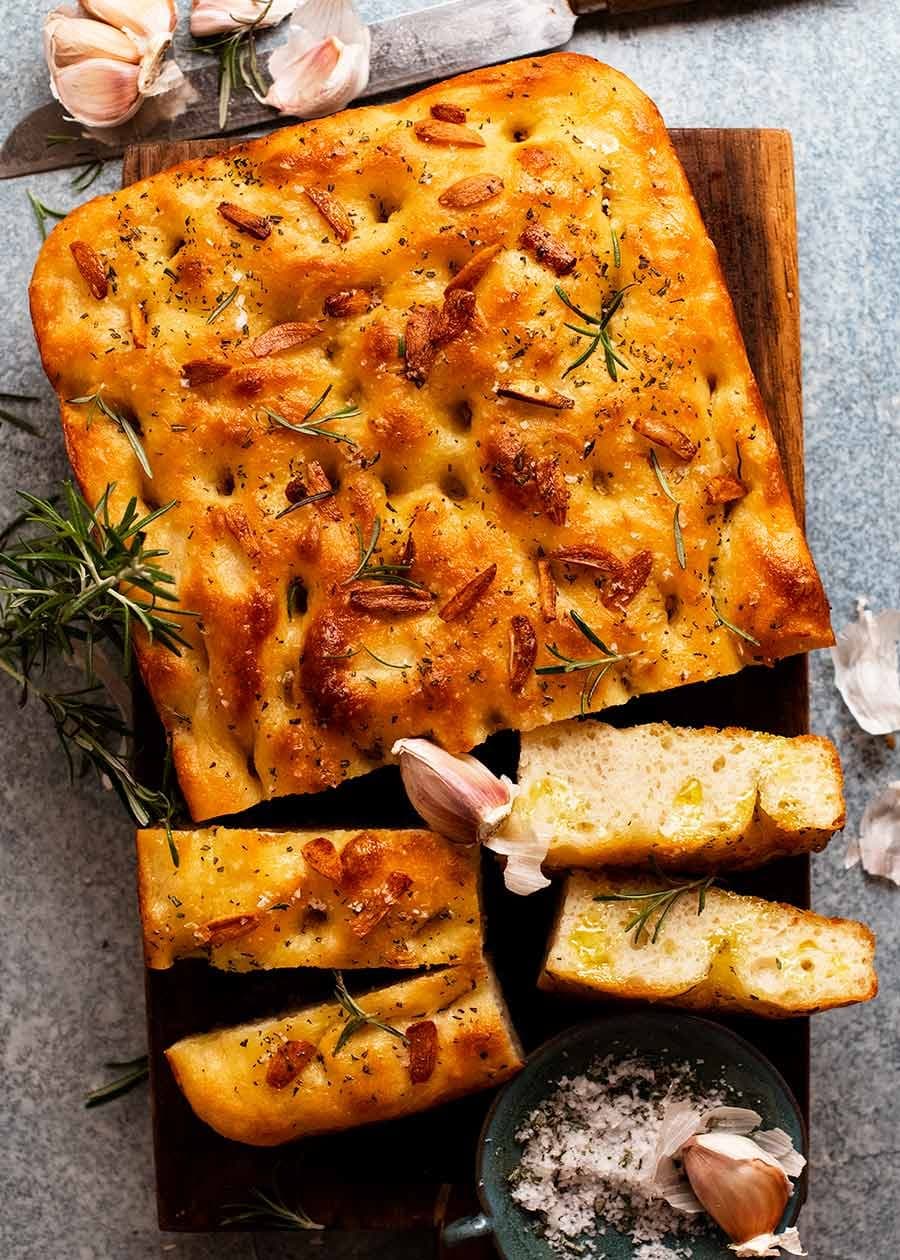
The finishing application is where great olive oil truly earns its reputation. A thread of vivid green oil over a bowl of white bean soup. A generous pour across a plate of sliced tomatoes. A final drizzle over fresh focaccia still warm from the oven. In these contexts, the oil is not a cooking medium but a condiment, and the difference between a mediocre oil and a great one is as stark as the difference between table wine and a serious bottle.
Tasting olive oil seriously, the way one might taste wine, is an education worth pursuing. Professional panels use small blue glasses to eliminate color bias, since color tells nothing reliable about quality. They warm the glass in their palms, inhale deeply, and then take a small sip, drawing air across the oil to volatilize the aromatics. The best oils reveal layers: fresh-cut grass, green almond, artichoke, tomato leaf, black pepper. The worst reveal nothing, or worse, the telltale flat rancidity that indicates an oil well past its useful life.
The olive oil industry is slowly improving, driven by consumer education, stricter enforcement in some regions, and the rise of specialty retailers who stake their reputations on sourcing legitimate product. But the burden remains largely on the consumer. Reading labels critically, buying from reputable sources, prioritizing freshness over brand recognition, and above all, learning what real extra virgin olive oil actually tastes like: these are the defenses against an industry that has spent decades selling mediocrity at premium prices.

— More to read

— 10 Minute · Article
Ramadan at the Table: The Foods That Break the Fast
When the sun sets during the holy month, the first bite is never random. Across the Muslim world, iftar follows a structure as precise as the fast itself, shaped by centuries of nutritional wisdom, religious practice, and culinary tradition.

— 11 Minute · Article
The Tagine: A Vessel Shaped by Centuries
Long before Dutch ovens or pressure cookers, Berber cooks in North Africa perfected a conical clay vessel that turns scarce water and low heat into extraordinary depth of flavor — and modern food science is only now explaining why.

— 12 Minute · Article
Preserved Lemons — The Science, the Tradition, and the Three Weeks That Change Everything
Salt, citrus, time. Inside the Moroccan pantry staple that food scientists and chefs across three continents consider irreplaceable.

— 14 Minute · Article
The Lobster Chapter — From Trap to Table on the New England Coast
How a cold-water crustacean became the centerpiece of New England identity — and what most people still get wrong about cooking it.

— 9 Minute · Article
The Private Chef Question: What Happens When Dinner Is the Event
Private dining is booming. But the shift from restaurant kitchen to someone's home changes everything — the menu, the service, the relationship between chef and guest. Inside the quiet rise of dinner as experience.

— 9 Minute · Article
French Technique, Moroccan Soul: Where Two Traditions Meet
Confit and m'chermel. Roux and smen. Braise and tagine. The culinary overlap between France and Morocco runs deeper than colonial history — it is a conversation between two of the world's great kitchen traditions.

— 9 Minute · Article
The Table Is the Thing: Why Setting Matters as Much as Cooking
A perfectly cooked dish served on the wrong plate, in the wrong light, at the wrong height, loses something essential. The art of table setting is not decoration — it is the final act of cooking.

— 9 Minute · Article
Sourcing in New England: A Chef's Guide to the Local Supply Chain
Between the Boston Fish Pier and the winter CSA box, New England's food supply chain is more complex — and more fragile — than most diners realize. A practical look at what local actually means.

— 8 Minute · Article
The Grandmother Test: When a Recipe Is Actually Done
She never set a timer. She listened to the tagine, pressed the dough, smelled the bread. The unwritten knowledge of grandmothers is the most valuable — and most endangered — form of culinary intelligence.

— 9 Minute · Article
On Bread: The Oldest Recipe in the World
From Moroccan khobz baked in communal ovens to the exacting crumb of a French baguette, bread remains the one recipe every civilization shares. A look at the science, history, and quiet revolution happening in flour and water.