
March 25, 2026

— 12 Minute · March 25, 2026
Preserved Lemons — The Science, the Tradition, and the Three Weeks That Change Everything
Salt, citrus, time. Inside the Moroccan pantry staple that food scientists and chefs across three continents consider irreplaceable.
In the medinas of Fez and Marrakech, in the cramped spice shops where the air is thick with cumin and dried rosebuds, you will find them on the lowest shelf, packed into cloudy glass jars the color of old gold. Preserved lemons. They are not beautiful. They are not photogenic. They look, frankly, like something forgotten. And they are one of the most important ingredients in North African cooking.
The technique is almost absurdly simple. Take fresh lemons — the thin-skinned varieties are best, Meyer lemons or the North African doqq — quarter them without cutting all the way through, pack the cuts with coarse salt, press them into a sterilized jar, and wait. Three weeks minimum. Four is better. The salt draws moisture from the fruit through osmosis. The juice, now heavily saline, submerges the lemons entirely, creating an anaerobic environment in which lacto-fermentation begins.

Dr. Robert Hutkins, a professor of food science at the University of Nebraska-Lincoln and the author of Microbiology and Technology of Fermented Foods, has studied lactic acid fermentation across dozens of food traditions. The process, he explains, is fundamentally the same whether the substrate is cabbage, cucumbers, or citrus. Lactic acid bacteria — principally species of Lactobacillus and Leuconostoc — metabolize the sugars present in the food, producing lactic acid as a byproduct. This acid lowers the pH of the brine, creating conditions hostile to spoilage organisms and pathogenic bacteria while simultaneously generating the complex, tangy flavor profile characteristic of all lacto-fermented foods.
What makes preserved lemons distinctive within this family of fermented ingredients is the rind. In a fresh lemon, the rind is intensely bitter — a consequence of limonin and other limonoid compounds concentrated in the albedo, the white pith beneath the colored zest. During fermentation, these bitter compounds break down. The essential oils in the zest — limonene, citral, linalool — remain, but their sharpness is softened and rounded by the lactic acid and the salt. The result is a flavor that Harold McGee, in On Food and Cooking, describes as having no real equivalent: simultaneously sour, salty, floral, and deeply savory, with a quality he calls umami-adjacent.
Paula Wolfert, whose 1973 book Couscous and Other Good Food from Morocco introduced preserved lemons to the American culinary mainstream, has written extensively about the ingredient's centrality in Moroccan cuisine. In an interview with the food journal Lucky Peach, she described preserved lemons as the ingredient that separates competent Moroccan cooking from authentic Moroccan cooking. Without them, she said, a chicken tagine with olives is just a braised chicken. With them, it becomes something else entirely — something that tastes of place and time.
The science supports her claim. A 2019 study published in the Journal of Food Science and Technology by researchers at Hassan II University in Casablanca analyzed the volatile compound profile of Moroccan preserved lemons at various stages of fermentation. The team identified more than sixty distinct aromatic compounds in lemons fermented for four weeks — roughly triple the number present in the fresh fruit. The fermentation process did not merely preserve the lemons. It created new flavors that did not exist in the original ingredient.

Among the compounds that appeared or intensified during fermentation were several that food scientists associate with complexity and depth: acetoin, which contributes a buttery note; diacetyl, which adds richness; and various esters that produce fruity, floral aromatics. The researchers concluded that preserved lemons should be understood not as a preserved version of fresh lemons but as a fundamentally different ingredient — one that shares a botanical origin with the fresh fruit but possesses a distinct and considerably more complex flavor profile.
This is a point worth dwelling on, because it explains why preserved lemons cannot be approximated. A common suggestion in Western recipe adaptations is to substitute fresh lemon juice and a pinch of salt. This is, from a chemical standpoint, roughly equivalent to substituting grape juice for wine. The raw materials are related. The products are not.
Claudia Roden, in her landmark work The New Book of Middle Eastern Food, traces the use of preserved citrus across the Mediterranean basin and into the Middle East, where pickled limes serve a similar function in Iraqi and Gulf cuisines. The technique, she notes, almost certainly predates written records. Salt preservation of fruits and vegetables is among the oldest food technologies known to human civilization, appearing independently in cultures across Africa, Asia, and the Mediterranean.
In Morocco, preserved lemons are used with a specificity that reflects centuries of refinement. The flesh — soft, pulpy, almost jam-like after fermentation — is typically discarded or used only in sauces where its intense salinity can be diluted. The rind is the prize. It is sliced into thin strips or diced fine and added to tagines in the last twenty minutes of cooking, to salads as a finishing element, to chermoula marinades, and to the slow-simmered lemon-and-olive sauce that defines one of the country's most celebrated dishes: djaj m'qualli, chicken with preserved lemons and green olives.

The flavor that the rind contributes is not merely sour or salty. It is aromatic in a way that transforms the entire dish. Yotam Ottolenghi, who has done more than perhaps any other contemporary chef to popularize preserved lemons in Western cooking, described their effect in his cookbook Jerusalem as almost perfume-like. A small amount, he writes, lifts a dish the way a high note lifts a chord — you may not be able to identify it, but you notice immediately when it is absent.
Making preserved lemons at home requires nothing more than lemons, salt, a jar, and patience. The ratio is roughly one tablespoon of coarse sea salt per lemon. The lemons are quartered, packed with salt, pressed into the jar tightly enough to begin releasing their juice, and then sealed. Additional fresh lemon juice can be added to ensure the fruit is fully submerged. The jar should be stored at room temperature, inverted or shaken daily to redistribute the brine, for a minimum of three weeks.
Dr. Sandor Katz, the author of The Art of Fermentation and widely regarded as the foremost popular authority on fermentation in the English-speaking world, recommends a fermentation period of at least four weeks for preserved lemons. In a lecture at the Oxford Symposium on Food and Cookery, he noted that the lactic acid bacteria responsible for the fermentation work slowly at the high salt concentrations typical of preserved lemons. Shorter fermentation periods produce lemons that are salty but not yet fully transformed — the bitterness of the pith will not have fully broken down, and the complex secondary aromatics will not have developed.
The finished product, properly made, will keep in the refrigerator for a year or more. The brine itself — cloudy, powerfully salty, and dense with lemon flavor — is a secondary product of considerable value. It can be used to dress grain salads, to deglaze a pan after searing lamb, to spike a vinaigrette, or to add depth to a bloody mary. Nothing is wasted.
In recent years, preserved lemons have migrated well beyond their North African origins. They appear on menus at restaurants in Copenhagen, Melbourne, and San Francisco. They have been adopted by chefs working in traditions that have no historical connection to the ingredient — Japanese-inflected tasting menus, Scandinavian fermentation programs, South American ceviches. This migration is itself a testament to the ingredient's versatility and to the growing recognition among professional cooks that fermented flavors provide a dimension of complexity that cannot be achieved through any other technique.
But the heart of the ingredient remains where it has always been: in the tagine pot, in the Moroccan kitchen, in the hands of cooks who learned the technique not from cookbooks or food science journals but from their mothers and grandmothers, who packed lemons into jars every autumn and waited for the weeks to pass, knowing that patience, in cooking as in most things, is not merely a virtue but a method.
— More to read

— 10 Minute · Article
Ramadan at the Table: The Foods That Break the Fast
When the sun sets during the holy month, the first bite is never random. Across the Muslim world, iftar follows a structure as precise as the fast itself, shaped by centuries of nutritional wisdom, religious practice, and culinary tradition.

— 10 Minute · Article
Liquid Gold: What Most People Get Wrong About Olive Oil
The bottle in your pantry is almost certainly not what it claims to be. The olive oil industry is plagued by fraud, misunderstanding, and a chemical complexity that most consumers never encounter. Here is what actually matters.

— 11 Minute · Article
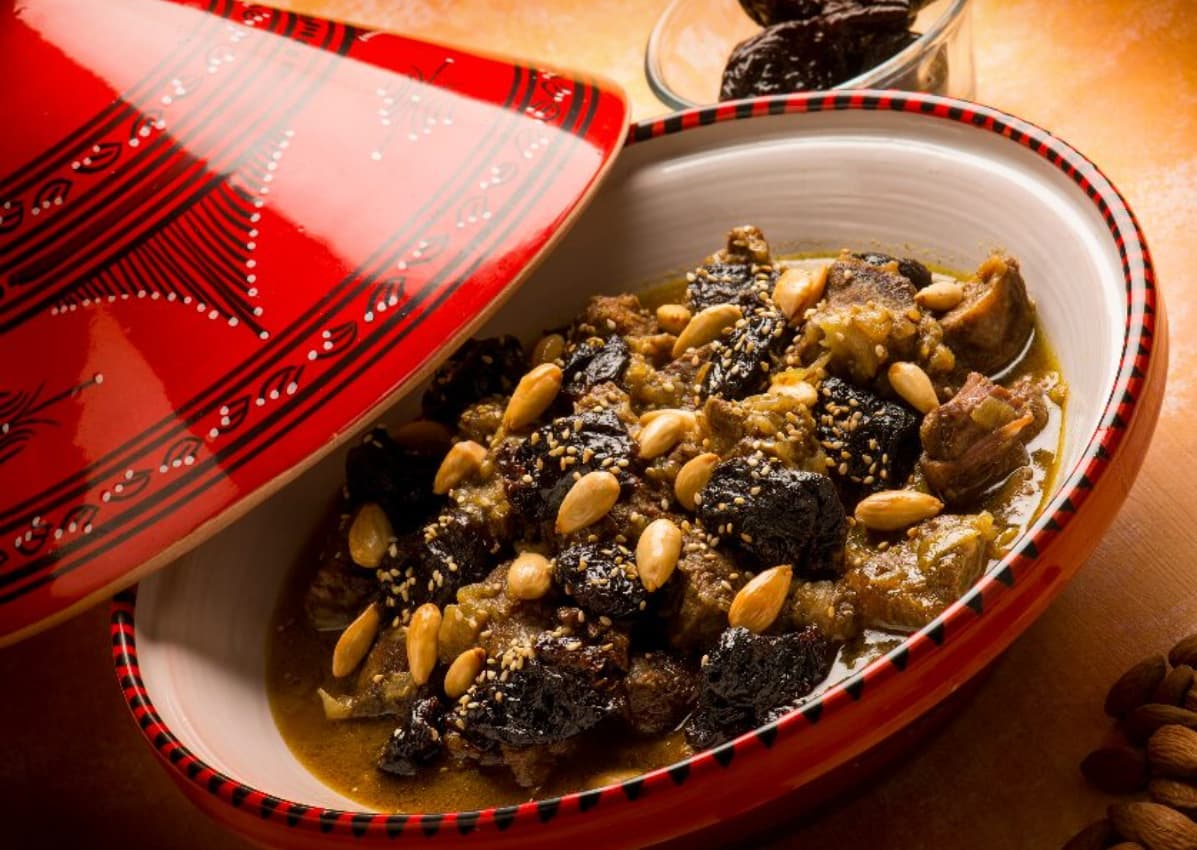
The Tagine: A Vessel Shaped by Centuries
Long before Dutch ovens or pressure cookers, Berber cooks in North Africa perfected a conical clay vessel that turns scarce water and low heat into extraordinary depth of flavor — and modern food science is only now explaining why.

— 14 Minute · Article
The Lobster Chapter — From Trap to Table on the New England Coast
How a cold-water crustacean became the centerpiece of New England identity — and what most people still get wrong about cooking it.

— 9 Minute · Article
The Private Chef Question: What Happens When Dinner Is the Event
Private dining is booming. But the shift from restaurant kitchen to someone's home changes everything — the menu, the service, the relationship between chef and guest. Inside the quiet rise of dinner as experience.

— 9 Minute · Article
French Technique, Moroccan Soul: Where Two Traditions Meet
Confit and m'chermel. Roux and smen. Braise and tagine. The culinary overlap between France and Morocco runs deeper than colonial history — it is a conversation between two of the world's great kitchen traditions.

— 9 Minute · Article
The Table Is the Thing: Why Setting Matters as Much as Cooking
A perfectly cooked dish served on the wrong plate, in the wrong light, at the wrong height, loses something essential. The art of table setting is not decoration — it is the final act of cooking.

— 9 Minute · Article
Sourcing in New England: A Chef's Guide to the Local Supply Chain
Between the Boston Fish Pier and the winter CSA box, New England's food supply chain is more complex — and more fragile — than most diners realize. A practical look at what local actually means.

— 8 Minute · Article
The Grandmother Test: When a Recipe Is Actually Done
She never set a timer. She listened to the tagine, pressed the dough, smelled the bread. The unwritten knowledge of grandmothers is the most valuable — and most endangered — form of culinary intelligence.

— 9 Minute · Article
On Bread: The Oldest Recipe in the World
From Moroccan khobz baked in communal ovens to the exacting crumb of a French baguette, bread remains the one recipe every civilization shares. A look at the science, history, and quiet revolution happening in flour and water.