
June 24, 2026

— 9 Minute · June 24, 2026
On Bread: The Oldest Recipe in the World
From Moroccan khobz baked in communal ovens to the exacting crumb of a French baguette, bread remains the one recipe every civilization shares. A look at the science, history, and quiet revolution happening in flour and water.
There is no older recipe than bread. Before written language codified the ratios, before ovens existed in any form recognizable today, humans were mixing ground grain with water and exposing it to heat. The result was sustenance, yes, but also something more: a social contract. Bread meant settlement. It meant agriculture. It meant tomorrow.
The science underneath a loaf is deceptively complex. When flour meets water, two proteins — glutenin and gliadin — bond to form gluten, a network of elastic strands that traps the carbon dioxide produced by yeast fermentation. As Harold McGee writes in On Food and Cooking, this network is what gives bread its structure, its chew, its ability to rise from a flat paste into something architectural. The strength and extensibility of that gluten network determine everything: whether the crumb is open and irregular, like a ciabatta, or tight and uniform, like a pullman loaf. Temperature, hydration, and time are the three variables a baker manipulates, but the underlying chemistry is always the same reaction between protein and water.
What changes from culture to culture is not the science but the intention. In Morocco, khobz — the round, slightly dense loaf that appears at every meal — is baked with a mixture of white and whole wheat flour, often with a small addition of semolina for texture. Traditionally, households would prepare their dough at home, mark it with a family stamp, and send it to the communal wood-fired oven, the ferran, where the baker would manage dozens of loaves simultaneously. The bread that came back was crusty, fragrant, and specific to each family. It was also essential: in Moroccan dining, khobz is not a side dish but a utensil, used to scoop tagines, dip into zaalouk, and mop the last traces of sauce from a shared plate.
The French baguette operates under entirely different principles. The 1993 Decret Pain, a French law still in effect, specifies that a traditional baguette may contain only four ingredients: wheat flour, water, salt, and yeast or levain. No additives, no preservatives, no fats. The result is a bread defined by its crust — that shattering, caramelized exterior produced by steam injection in the first minutes of baking — and by its ephemeral nature. A proper baguette is stale within hours. This is not a flaw but a feature, a bread designed to be bought and consumed the same day, twice daily if the household is serious about it.
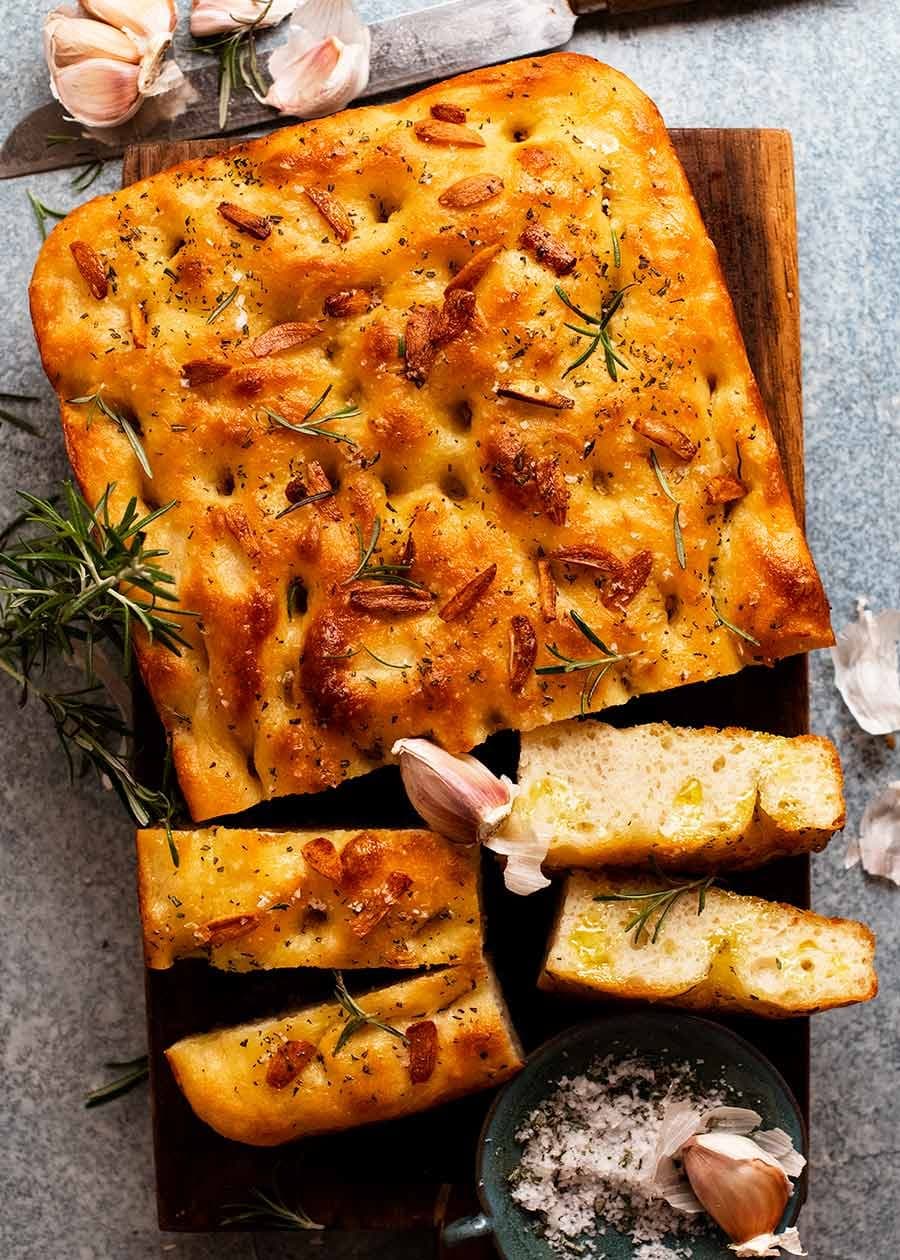
Italian focaccia takes yet another philosophical position. Where the baguette is lean and austere, focaccia is generous: olive oil worked into the dough and pooled on the surface, coarse salt pressed into dimples made by fingertips, sometimes rosemary or grape must or thin-sliced onion added on top. The dough is high-hydration and given long, slow fermentation, producing an interior that is both airy and moist. In Liguria, where focaccia di Recco originated, bakers stretch the dough so thin it becomes translucent before filling it with stracchino cheese. It is bread reimagined as a vessel for fat and flavor.

The modern sourdough revival has brought renewed attention to wild fermentation, but the practice is ancient. Dr. Karl De Smedt, curator of the Puratos Sourdough Library in Saint-Vith, Belgium — a repository that maintains over 130 sourdough starters from around the world — has spent years cataloging the microbial diversity of these cultures. Each starter, he notes, contains a unique ecosystem of wild yeasts and lactic acid bacteria shaped by local flour, water, temperature, and the hands of the baker. A starter from San Francisco behaves differently than one from Berlin, not because of some mystical terroir but because microbial populations adapt to their environment. The library exists to preserve this biodiversity, to ensure that the industrialization of bread does not erase the thousands of microbial lineages that bakers have unknowingly cultivated for millennia.
Chad Robertson, the baker behind Tartine in San Francisco, is often credited with sparking the American sourdough renaissance, though he would be the first to note that he was simply paying attention to what European bakers had never stopped doing. His approach — long, cold fermentation, high hydration, a dark and blistered crust — was radical primarily in the American context, where supermarket bread had become so industrialized that many consumers had forgotten what naturally fermented bread tasted like. Robertson has spoken extensively about the relationship between time and flavor in bread, arguing that the long fermentation not only develops complex acidity but also makes the bread more digestible, as the bacteria break down phytic acid and other compounds that can cause gastrointestinal discomfort.
The nutritional dimension of bread has become increasingly contentious. The rise of gluten-free diets, driven partly by the very real condition of celiac disease and partly by broader wellness trends, has cast bread as a dietary villain in certain circles. Yet the science is more nuanced. Research published in the journal Gastroenterology has suggested that for non-celiac individuals, the issue may not be gluten itself but rather the speed of modern bread production. Industrial bread, made with commercial yeast and rapid-rise methods, skips the long fermentation that naturally reduces FODMAPs — fermentable carbohydrates that cause bloating and discomfort. Slow-fermented sourdough, by contrast, has been shown in some studies to be better tolerated even by individuals who report sensitivity to commercial bread.

Elizabeth David, the English food writer whose 1977 book English Bread and Yeast Cookery remains a masterwork on the subject, was among the first to articulate the cultural consequences of industrial bread. She documented the decline of regional English baking traditions — the lardy cakes, the cottage loaves, the barley breads — as factory production homogenized what had been a diverse baking culture. Her argument was not merely nostalgic. She understood that when a culture loses its bread traditions, it loses a form of knowledge that cannot easily be recovered: the feel of dough at the right hydration, the smell of proper fermentation, the instinct for when a loaf is done.
That instinct is what connects the Moroccan grandmother marking her khobz, the Parisian baker scoring his baguette, and the Ligurian focaccia maker stretching dough over the backs of her hands. Bread is not merely a recipe. It is a set of physical skills transmitted through repetition, a form of knowledge that lives in the hands more than on the page.
The current moment in bread is fascinating precisely because it sits at the intersection of science and tradition. Home bakers now have access to information that would have been the exclusive domain of professional bakeries a generation ago: hydration percentages, autolyse techniques, the Maillard reaction kinetics that govern crust formation. Instagram is filled with crumb shots, those cross-sections of sourdough loaves that display their interior architecture like geological strata. Yet for all this information, the fundamental challenge of bread remains unchanged. It is still flour, water, salt, and time. It still requires patience. It still rewards attention.
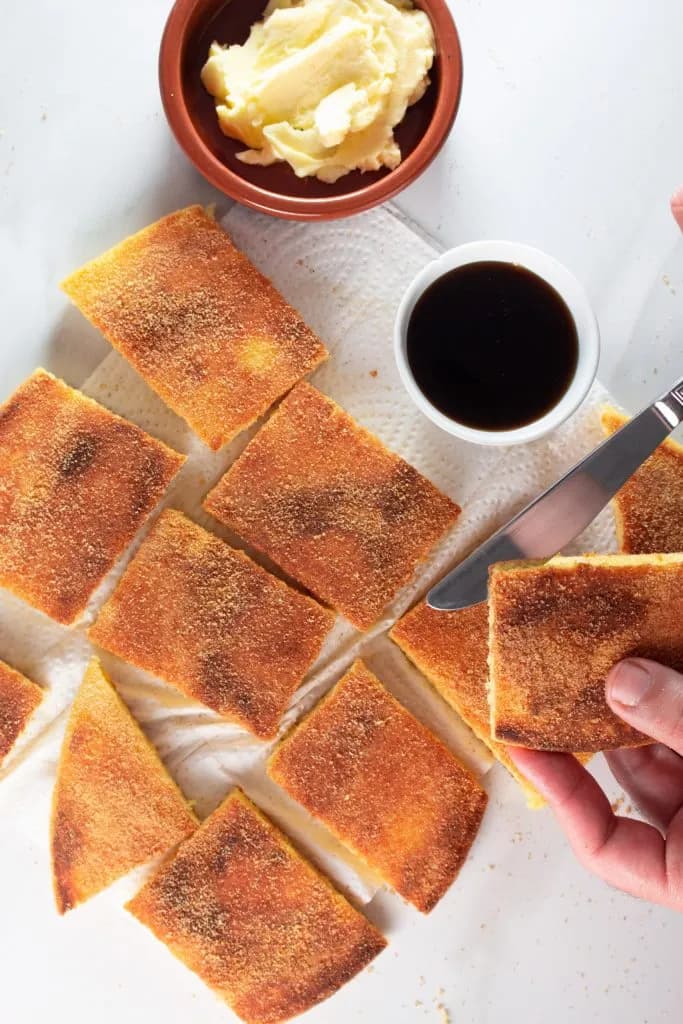
In a professional kitchen, bread service is often the first and last impression a diner receives. A private chef preparing a multi-course dinner might bake focaccia that afternoon, its olive oil fragrance filling the kitchen as guests arrive. A Moroccan-themed evening might open with warm msemen, the layered flatbread whose buttery, flaky texture comes from a folding technique not unlike puff pastry. A French menu might demand a baguette baked that morning, served with cultured butter and fleur de sel.
What unites these breads is not technique or tradition but function. Bread is the invitation to begin. It is what arrives at the table first, before the courses, before the wine is fully poured, before the conversation has settled into its rhythm. It signals that the meal has started, that someone has taken the time to prepare something elemental for the people gathered.
Fourteen thousand years of bread, and the recipe remains the same: grain, water, heat, and the willingness to wait.

— More to read

— 10 Minute · Article
Ramadan at the Table: The Foods That Break the Fast
When the sun sets during the holy month, the first bite is never random. Across the Muslim world, iftar follows a structure as precise as the fast itself, shaped by centuries of nutritional wisdom, religious practice, and culinary tradition.

— 10 Minute · Article
Liquid Gold: What Most People Get Wrong About Olive Oil
The bottle in your pantry is almost certainly not what it claims to be. The olive oil industry is plagued by fraud, misunderstanding, and a chemical complexity that most consumers never encounter. Here is what actually matters.

— 11 Minute · Article
The Tagine: A Vessel Shaped by Centuries
Long before Dutch ovens or pressure cookers, Berber cooks in North Africa perfected a conical clay vessel that turns scarce water and low heat into extraordinary depth of flavor — and modern food science is only now explaining why.

— 12 Minute · Article
Preserved Lemons — The Science, the Tradition, and the Three Weeks That Change Everything
Salt, citrus, time. Inside the Moroccan pantry staple that food scientists and chefs across three continents consider irreplaceable.

— 14 Minute · Article
The Lobster Chapter — From Trap to Table on the New England Coast
How a cold-water crustacean became the centerpiece of New England identity — and what most people still get wrong about cooking it.

— 9 Minute · Article
The Private Chef Question: What Happens When Dinner Is the Event
Private dining is booming. But the shift from restaurant kitchen to someone's home changes everything — the menu, the service, the relationship between chef and guest. Inside the quiet rise of dinner as experience.

— 9 Minute · Article
French Technique, Moroccan Soul: Where Two Traditions Meet
Confit and m'chermel. Roux and smen. Braise and tagine. The culinary overlap between France and Morocco runs deeper than colonial history — it is a conversation between two of the world's great kitchen traditions.

— 9 Minute · Article
The Table Is the Thing: Why Setting Matters as Much as Cooking
A perfectly cooked dish served on the wrong plate, in the wrong light, at the wrong height, loses something essential. The art of table setting is not decoration — it is the final act of cooking.

— 9 Minute · Article
Sourcing in New England: A Chef's Guide to the Local Supply Chain
Between the Boston Fish Pier and the winter CSA box, New England's food supply chain is more complex — and more fragile — than most diners realize. A practical look at what local actually means.

— 8 Minute · Article
The Grandmother Test: When a Recipe Is Actually Done
She never set a timer. She listened to the tagine, pressed the dough, smelled the bread. The unwritten knowledge of grandmothers is the most valuable — and most endangered — form of culinary intelligence.