
March 18, 2026

— 14 Minute · March 18, 2026
The Lobster Chapter — From Trap to Table on the New England Coast
How a cold-water crustacean became the centerpiece of New England identity — and what most people still get wrong about cooking it.
Every summer morning, before the harbor tour boats and the whale-watch charters push out of Gloucester, the lobster fleet is already gone. They left in the dark, somewhere around four, their running lights cutting across the flat black water of the inner harbor. By the time most of the city is awake, the traps are being hauled.
The American lobster, Homarus americanus, is one of the most commercially valuable marine species on the Atlantic seaboard. According to the National Marine Fisheries Service, the 2023 U.S. lobster harvest exceeded 130 million pounds, with Maine alone accounting for roughly eighty percent of the national catch. Massachusetts — particularly the waters off Cape Ann, the South Shore, and the Outer Cape — contributes a meaningful share of the remainder. The industry supports more than 10,000 licensed harvesters across New England and generates over $700 million in annual dockside revenue.
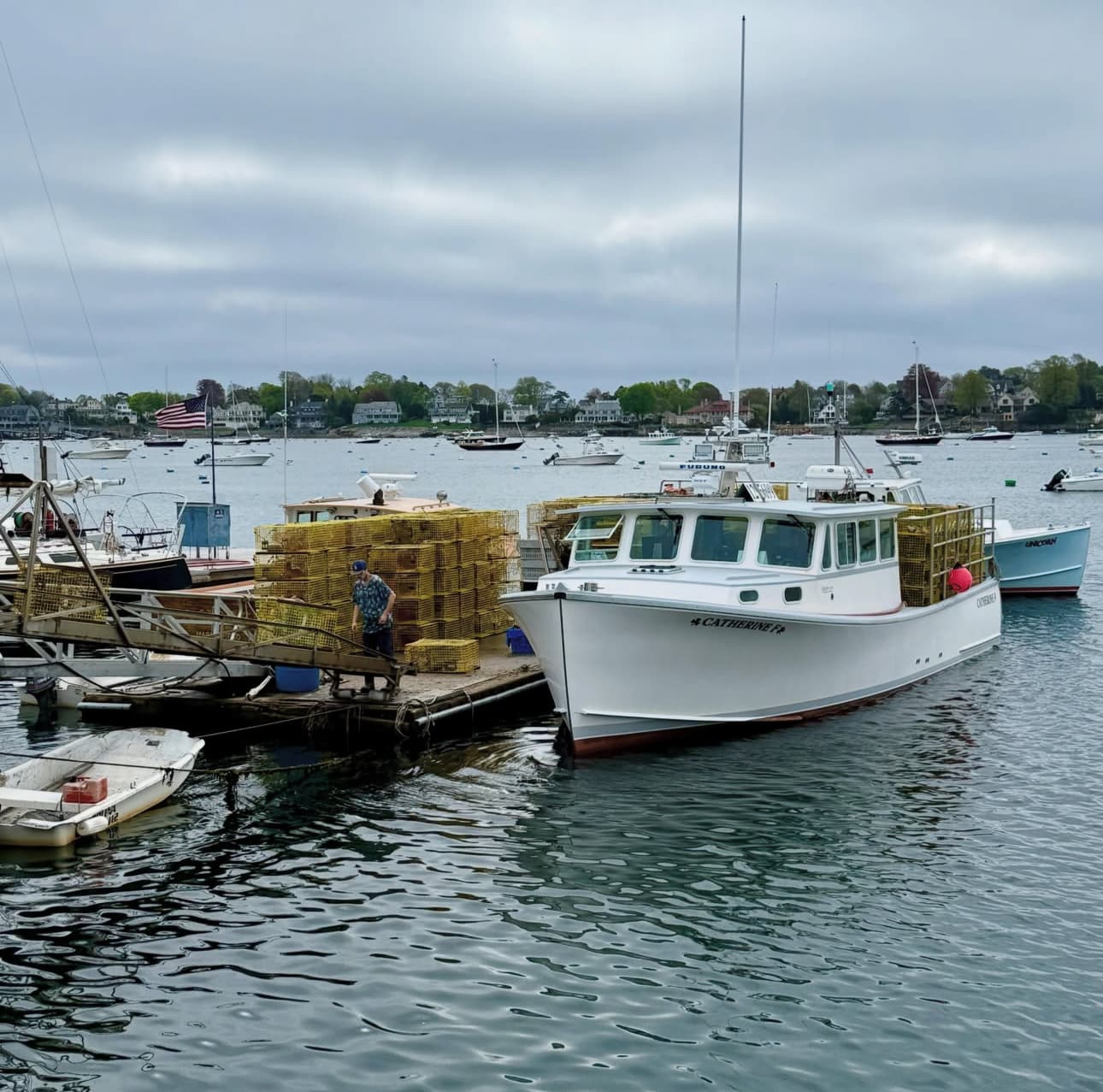
But the numbers, however impressive, miss the texture of the thing. Lobstering in New England is not an industry in the way that software or finance is an industry. It is a trade passed between generations, governed by unwritten territorial codes, shaped by tidal rhythms and water temperature, and anchored to a specific stretch of coastline in a way that almost nothing in modern American life is anchored to anything anymore.
Trevor Corson, in his meticulously reported book The Secret Life of Lobsters, describes the territorial system off the coast of Maine as a form of self-governance that has no parallel in any other American fishery. Lobstermen fish specific zones. They mark their traps with uniquely colored buoys. They respect boundaries that exist on no official chart. Violations are handled not by the Coast Guard but by the community itself — sometimes through conversation, sometimes through the cutting of trap lines. It is, Corson writes, a system built on mutual surveillance and mutual restraint, and it has been remarkably effective at sustaining the resource.
Dr. Robert Steneck, a marine biologist at the University of Maine who has studied lobster populations for more than three decades, has noted that the Gulf of Maine lobster fishery is one of the few large-scale fisheries in the world that has actually increased in productivity over the past forty years. The reasons are complex. Warming waters in the Gulf of Maine — which, according to a 2023 report from the Gulf of Maine Research Institute, is warming faster than ninety-nine percent of the global ocean — have expanded the thermal range favorable to juvenile lobster survival. Meanwhile, the collapse of cod stocks, which historically preyed on juvenile lobsters, has removed a major source of natural predation.
The result is a paradox that Steneck has described in interviews with the Portland Press Herald and in his published work: the lobster boom may itself be a symptom of ecological imbalance. The very conditions that produce record harvests — warmer water, fewer predators — are indicators of a marine ecosystem under stress. What looks like abundance may be, in ecological terms, a warning.

None of this is visible at the fish counter. What the consumer sees is a tank full of dark-shelled crustaceans, banded at the claws, priced by the pound. And this is where the gap between the industry and the kitchen becomes most apparent.
The first mistake most home cooks make with lobster is overcomplicating it. The second mistake is overcooking it. Jasper White, the legendary Boston chef whose book Lobster at Home remains the definitive household reference on the subject, is direct on this point: a one-and-a-quarter-pound lobster needs no more than twelve to thirteen minutes in a covered pot of heavily salted, vigorously boiling water. Every additional minute costs the meat its tenderness. The proteins in lobster tail muscle are delicate — far more so than those in shrimp or crab — and they begin to seize and toughen almost immediately once the internal temperature exceeds 145 degrees Fahrenheit.
Harold McGee, in On Food and Cooking, explains the biochemistry plainly. Lobster muscle fibers are shorter and contain less connective tissue than those of most land animals, which is why the texture, when properly cooked, is almost buttery. But those same short fibers mean there is very little margin for error. Overcooked lobster becomes rubbery not because of any deficiency in the ingredient but because of a failure of attention.
The question of how to kill a lobster humanely is one that the food world has debated for decades and that science has only recently begun to resolve. A 2013 study published in the Journal of Experimental Biology by researchers at Queen's University Belfast found strong evidence that decapod crustaceans — including lobsters — experience a physiological stress response consistent with pain perception. The study prompted regulatory changes in several European countries, including Switzerland, which in 2018 banned the practice of boiling lobsters alive.
In professional kitchens, the standard method is a swift knife insertion at the intersection of the carapace and the head, which severs the central nerve ganglia and causes near-instantaneous death. This is the method recommended by the Humane Slaughter Association and practiced in most high-end restaurants. It is quick, it is efficient, and it allows the cook to proceed with the preparation without the ethical discomfort of a prolonged boil.
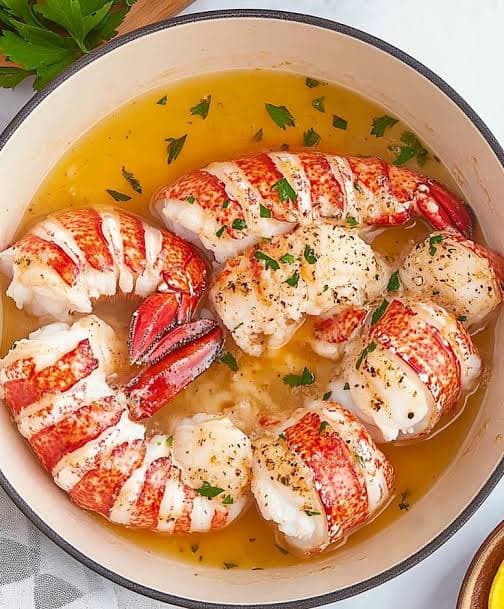
Butter-poaching — a technique popularized by Thomas Keller at The French Laundry and detailed in his cookbook Under Pressure — represents the gentlest possible application of heat to lobster meat. The method involves removing the raw tail and claw meat from the shell, then submerging it in a bath of clarified butter held at a precise 135 to 140 degrees Fahrenheit. At this temperature, the proteins coagulate slowly and evenly, producing a texture that is almost impossible to achieve through boiling or steaming: silky, yielding, barely firm, and saturated with the richness of the butter.
The technique requires patience. A lobster tail poached in butter at 140 degrees needs roughly twelve to fifteen minutes. The temptation to raise the heat must be resisted absolutely. What you are doing, in essence, is applying the logic of sous vide to a centuries-old ingredient — and the result justifies every minute of restraint.
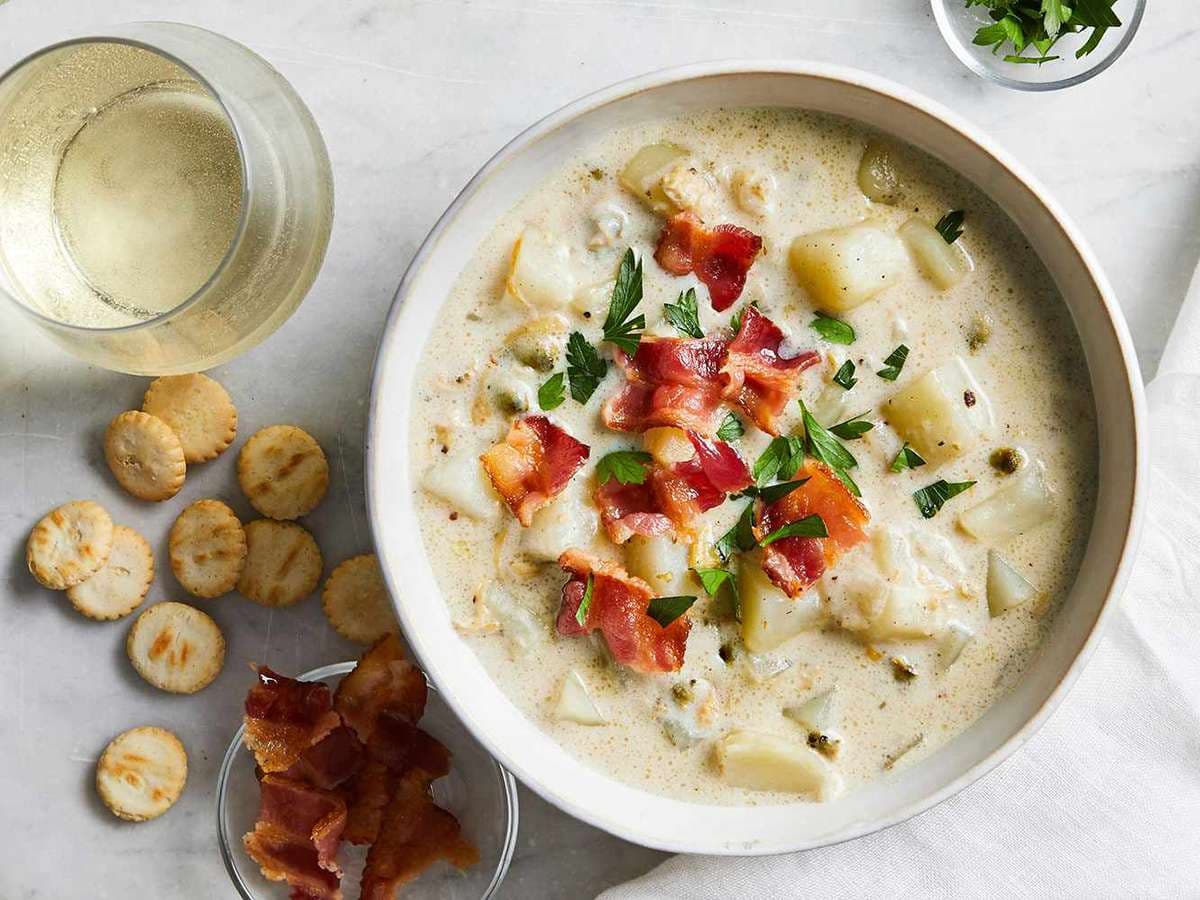
New England clam chowder, the other pillar of the regional seafood tradition, shares with lobster a reputation for simplicity that conceals real technique. The base is not cream, despite what most restaurant versions would suggest. The original chowders of coastal Massachusetts were built on salt pork, onions, potatoes, and the liquor from freshly shucked clams, with cream or milk added only at the finish and in modest quantity. The flavor should come from the sea, not from the dairy case.
Mark Bittman, in his column for the New York Times, once described New England clam chowder as a dish that has been so thoroughly degraded by restaurant versions that most Americans have never actually tasted the real thing. The real thing, he wrote, is thinner than you expect, more briny, more potato-forward, and leagues better than the flour-thickened paste that passes for chowder in most tourist-facing establishments.
The connection between lobster and the broader New England seafood tradition is not merely geographic. It is philosophical. These are ingredients that demand respect for timing, for temperature, for the integrity of the raw material. They do not improve with elaboration. They improve with restraint.
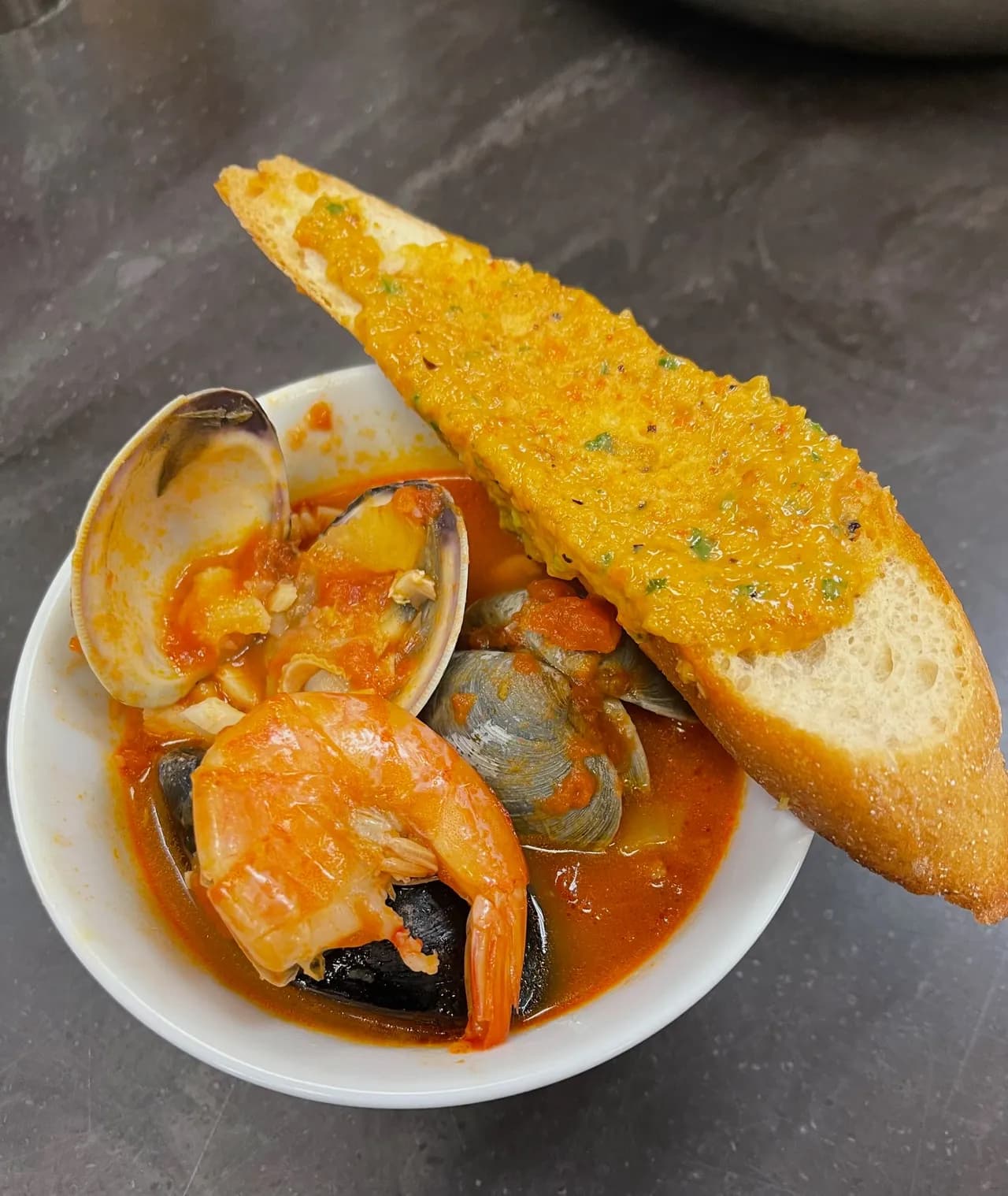
This is a principle that translates across culinary traditions. The bouillabaisse of Marseille — another seafood preparation rooted in a specific coastline and a specific fishing culture — operates on the same logic. The fish must be fresh. The broth must be built with care. The saffron and the fennel and the orange peel are supporting players, not headliners. The sea is the headliner.
What the New England coast teaches, if you are willing to learn it, is that the ingredient is not the starting point of the recipe. The ingredient is the recipe. Everything else — the butter, the salt, the twelve minutes in the pot — is just the frame.
— More to read

— 10 Minute · Article
Ramadan at the Table: The Foods That Break the Fast
When the sun sets during the holy month, the first bite is never random. Across the Muslim world, iftar follows a structure as precise as the fast itself, shaped by centuries of nutritional wisdom, religious practice, and culinary tradition.

— 10 Minute · Article
Liquid Gold: What Most People Get Wrong About Olive Oil
The bottle in your pantry is almost certainly not what it claims to be. The olive oil industry is plagued by fraud, misunderstanding, and a chemical complexity that most consumers never encounter. Here is what actually matters.

— 11 Minute · Article
The Tagine: A Vessel Shaped by Centuries
Long before Dutch ovens or pressure cookers, Berber cooks in North Africa perfected a conical clay vessel that turns scarce water and low heat into extraordinary depth of flavor — and modern food science is only now explaining why.

— 12 Minute · Article
Preserved Lemons — The Science, the Tradition, and the Three Weeks That Change Everything
Salt, citrus, time. Inside the Moroccan pantry staple that food scientists and chefs across three continents consider irreplaceable.

— 9 Minute · Article
The Private Chef Question: What Happens When Dinner Is the Event
Private dining is booming. But the shift from restaurant kitchen to someone's home changes everything — the menu, the service, the relationship between chef and guest. Inside the quiet rise of dinner as experience.

— 9 Minute · Article
French Technique, Moroccan Soul: Where Two Traditions Meet
Confit and m'chermel. Roux and smen. Braise and tagine. The culinary overlap between France and Morocco runs deeper than colonial history — it is a conversation between two of the world's great kitchen traditions.

— 9 Minute · Article
The Table Is the Thing: Why Setting Matters as Much as Cooking
A perfectly cooked dish served on the wrong plate, in the wrong light, at the wrong height, loses something essential. The art of table setting is not decoration — it is the final act of cooking.

— 9 Minute · Article
Sourcing in New England: A Chef's Guide to the Local Supply Chain
Between the Boston Fish Pier and the winter CSA box, New England's food supply chain is more complex — and more fragile — than most diners realize. A practical look at what local actually means.

— 8 Minute · Article
The Grandmother Test: When a Recipe Is Actually Done
She never set a timer. She listened to the tagine, pressed the dough, smelled the bread. The unwritten knowledge of grandmothers is the most valuable — and most endangered — form of culinary intelligence.

— 9 Minute · Article
On Bread: The Oldest Recipe in the World
From Moroccan khobz baked in communal ovens to the exacting crumb of a French baguette, bread remains the one recipe every civilization shares. A look at the science, history, and quiet revolution happening in flour and water.