
July 1, 2026

— 8 Minute · July 1, 2026
The Grandmother Test: When a Recipe Is Actually Done
She never set a timer. She listened to the tagine, pressed the dough, smelled the bread. The unwritten knowledge of grandmothers is the most valuable — and most endangered — form of culinary intelligence.
The recipe says forty-five minutes. The grandmother says it is done when it sounds right. Between these two instructions lies a gap that defines the difference between cooking and knowing how to cook.
Every culinary tradition has its version of this figure: the woman — it is almost always a woman — who has cooked the same dishes so many times that measurement has become irrelevant. She does not weigh flour. She does not consult a thermometer. She adds salt until it tastes correct, stirs until the consistency changes in a way she recognizes, and removes the pot from the heat at a moment determined by senses that have been calibrated across decades of repetition. Her knowledge is embodied, stored not in language but in muscle memory, olfactory recognition, and a tactile vocabulary that no recipe can reproduce.

Samin Nosrat, in Salt Fat Acid Heat, calls this kind of knowledge "the most important thing any cook can develop." Her entire pedagogical framework — organizing cooking around four fundamental elements rather than specific recipes — is an attempt to bridge the gap between the grandmother who knows and the home cook who follows instructions. Nosrat argues that once a cook understands how salt enhances flavor, how fat carries it, how acid balances it, and how heat transforms it, they can begin to cook intuitively, adjusting in real time rather than executing a predetermined plan. But she is also candid about the limitation: understanding principles intellectually is not the same as having them wired into your nervous system through years of practice.
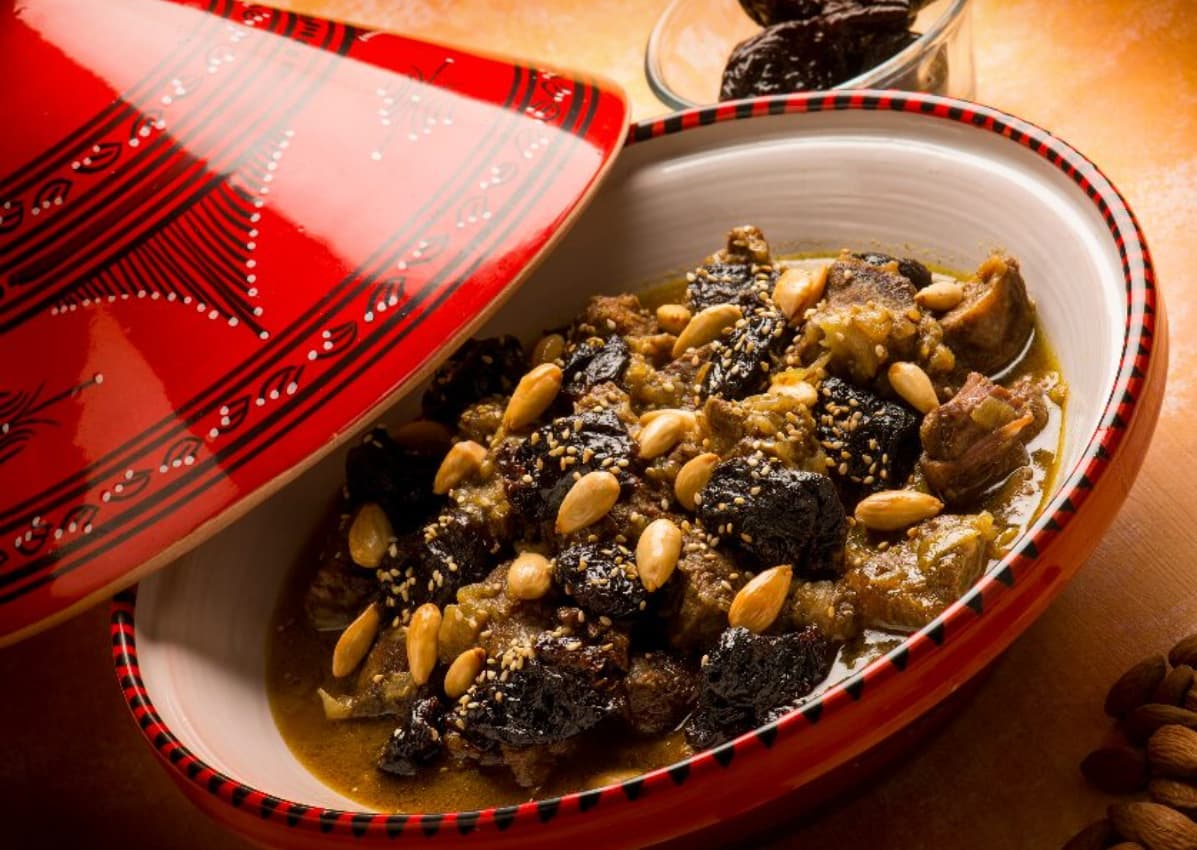
In Moroccan kitchens, this embodied knowledge takes specific, observable forms. A tagine is done when the sauce has reduced to a particular viscosity — thick enough to coat a piece of bread but not so thick that it clings to the pot. There is no universal measurement for this. The grandmother watches the surface of the liquid: when the bubbles slow and become larger, when the oil separates and pools in golden circles on the surface, when the steam changes from a vigorous plume to a thin, fragrant whisper, the tagine is ready. Mourad Lahlou, the Marrakech-born chef behind Aziza in San Francisco, has written about the difficulty of translating this kind of knowledge into restaurant protocols. In a professional kitchen, consistency requires timers, thermometers, and standardized procedures. But the dishes he remembers most vividly from his childhood were made by women who used none of these tools.
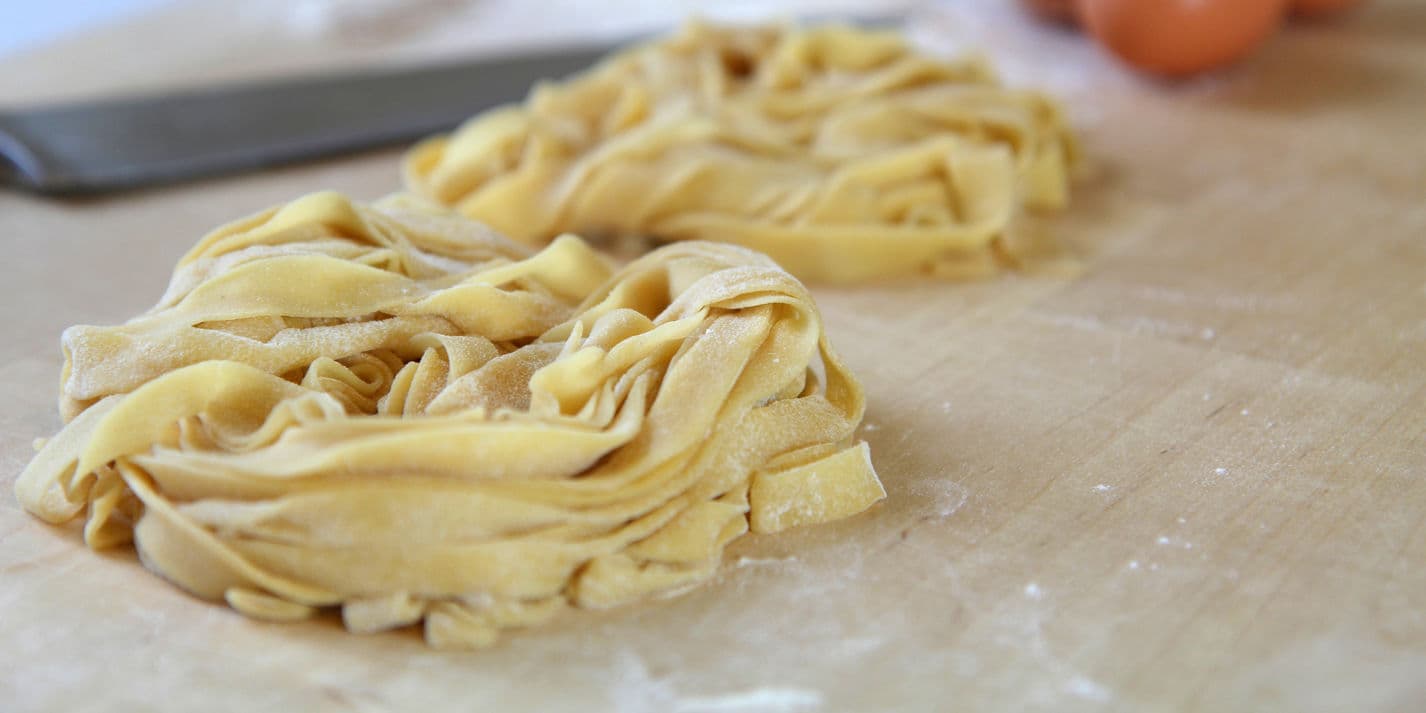
The Italian tradition carries a parallel wisdom. Marcella Hazan, whose cookbooks introduced generations of Americans to authentic Italian home cooking, was famously precise in her recipes — but also insistent that precision had limits. She wrote about testing pasta by biting it, not by checking a timer, because the cooking time printed on the box is an approximation that varies with altitude, water volume, the age of the pasta, and the vigor of the boil. She wrote about judging a risotto by its movement in the pan: it should flow like lava, she instructed, not sit like porridge and not run like water. These are descriptions that make perfect sense to someone who has watched risotto being made and no sense at all to someone reading them for the first time.

The tension between recipe and intuition is not merely practical — it is epistemological. David Sutton, a food anthropologist at Southern Illinois University and author of Remembrance of Repasts: An Anthropology of Food and Memory, has spent years studying how culinary knowledge is transmitted in Greek island communities. His research reveals that cooking knowledge is fundamentally synesthetic: it engages smell, touch, sight, hearing, and taste simultaneously, creating memory traces that are richer and more durable than those formed by reading instructions. When a grandmother teaches her granddaughter to make bread, the lesson is not just the ratio of flour to water but the feel of the dough at the right hydration, the sound of the crust when it is properly baked, the smell of fermentation at its peak. These sensory details form a gestalt that cannot be disaggregated into a list of steps.
Sutton makes a further argument that has implications beyond the kitchen: this kind of knowledge is inherently social. It requires co-presence. You cannot learn to feel dough through a video any more than you can learn to ride a bicycle by reading about it. The transmission of embodied culinary knowledge requires standing next to someone who has it, watching their hands, smelling what they smell, and gradually developing the same sensory calibrations through guided practice. This is why the loss of multigenerational cooking households represents not just a cultural change but an epistemological one — a loss of a particular kind of knowing that formal education cannot replace.
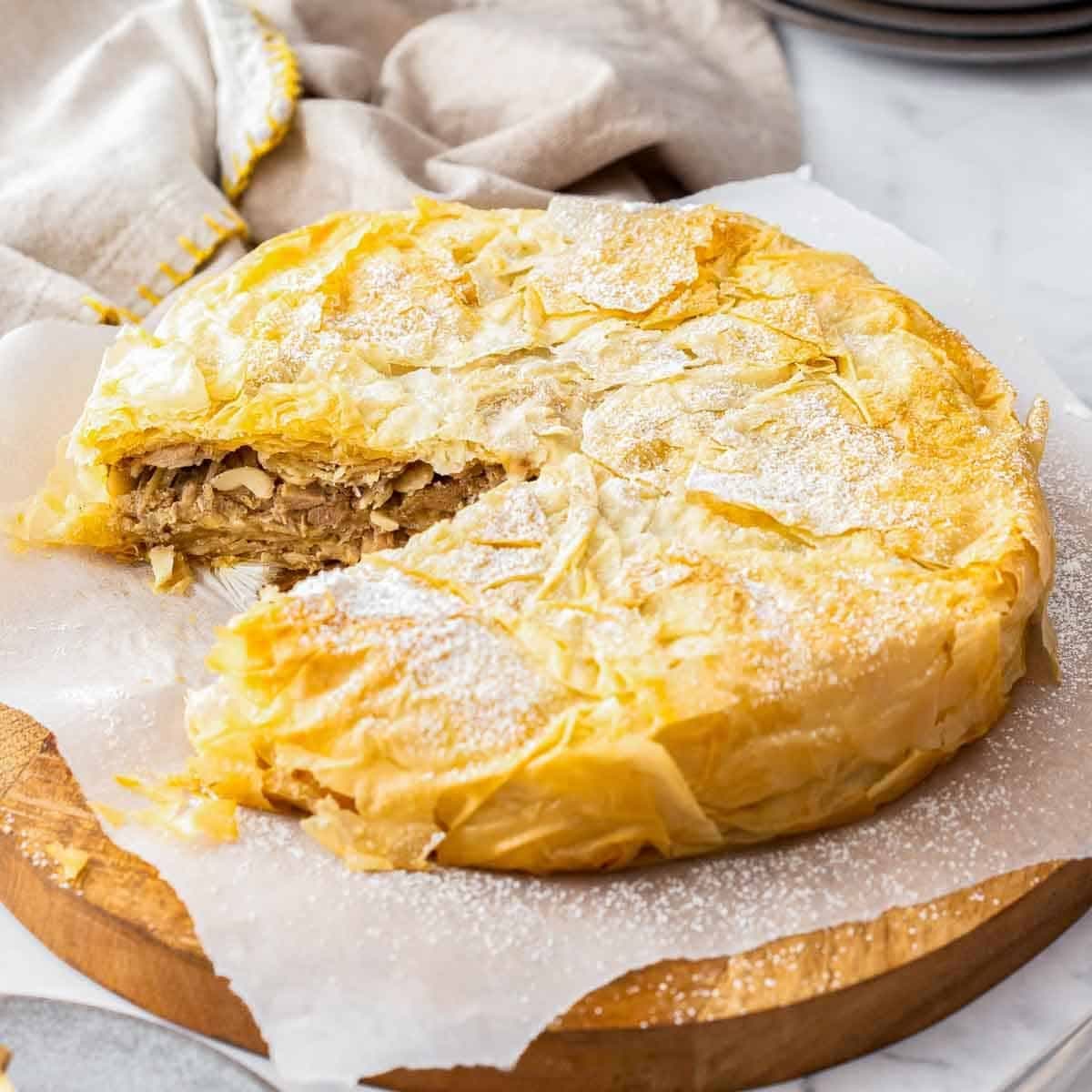
Chicken bastilla, the Moroccan pie of shredded poultry, eggs, almonds, and warqa pastry dusted with cinnamon and powdered sugar, illustrates this perfectly. The recipe can be written down. The proportions can be specified. But the critical skill — stretching warqa dough on an inverted pan until it is translucent and paper-thin without tearing — is a physical technique that takes years of practice. A grandmother who has made bastilla for forty years can stretch a sheet of warqa in seconds, her hands moving with an economy of motion that comes from having performed the gesture thousands of times. A novice, even with a perfect recipe, will tear the first fifty sheets.

The modern food media has tried various strategies to bridge this gap. High-speed video, close-up photography, and the proliferation of cooking shows have all attempted to make the invisible visible — to show what the dough looks like at the right moment, what the sauce looks like when it is properly reduced. But there is a difference between seeing and recognizing. Recognition requires a library of sensory experiences against which to compare the current stimulus, and building that library takes time and repetition.
This is not an argument against recipes. Recipes are essential — they are the starting point, the map that gets a cook into the right territory. Without Hazan's instructions, an American cook in 1973 would have had no idea where to begin with Bolognese. Without written proportions, the accumulated knowledge of professional pastry — where precision is genuinely critical — could not be transmitted at all. The point is that a recipe is necessary but not sufficient. It tells a cook what to do but not how to recognize when it has been done correctly.
In professional kitchens, this recognition is what separates a line cook from a chef. The line cook follows the recipe. The chef tastes, adjusts, and decides. The chef has made the dish enough times to know when the seasoning is exactly right, when the sauce needs another thirty seconds of reduction, when the heat should be dropped because the Maillard reaction is progressing too quickly. This judgment is not mystical or unteachable — it is simply the product of accumulated experience, the same kind of experience the grandmother has.
The private dining context brings this into sharp relief. When a chef prepares a meal in someone's home, there is no expediter calling tickets, no sous chef double-checking plates, no standardized equipment. The oven runs hot or cold. The burners vary. The pots are unfamiliar. Success in this environment depends not on following a recipe exactly but on knowing the dish well enough to adapt to conditions in real time — to recognize, by smell and sound and sight, whether the dish is where it needs to be.
This is the grandmother's gift: not a recipe but a relationship with food that is deep enough to be flexible. She does not need the instructions because she has something better — a body that remembers what right looks, smells, feels, and sounds like. The question for modern cooking culture is whether that kind of knowledge can survive in a world that increasingly demands everything be written down, measured out, and made reproducible.
The honest answer is: only partially. The recipe captures the skeleton. The grandmother carries the soul. And somewhere between the two, if a cook is patient and attentive and willing to make the dish a hundred times, the knowledge begins to transfer — from the page, through the hands, into a form of understanding that no recipe can fully contain.
— More to read

— 10 Minute · Article
Ramadan at the Table: The Foods That Break the Fast
When the sun sets during the holy month, the first bite is never random. Across the Muslim world, iftar follows a structure as precise as the fast itself, shaped by centuries of nutritional wisdom, religious practice, and culinary tradition.

— 10 Minute · Article
Liquid Gold: What Most People Get Wrong About Olive Oil
The bottle in your pantry is almost certainly not what it claims to be. The olive oil industry is plagued by fraud, misunderstanding, and a chemical complexity that most consumers never encounter. Here is what actually matters.

— 11 Minute · Article
The Tagine: A Vessel Shaped by Centuries
Long before Dutch ovens or pressure cookers, Berber cooks in North Africa perfected a conical clay vessel that turns scarce water and low heat into extraordinary depth of flavor — and modern food science is only now explaining why.

— 12 Minute · Article
Preserved Lemons — The Science, the Tradition, and the Three Weeks That Change Everything
Salt, citrus, time. Inside the Moroccan pantry staple that food scientists and chefs across three continents consider irreplaceable.

— 14 Minute · Article
The Lobster Chapter — From Trap to Table on the New England Coast
How a cold-water crustacean became the centerpiece of New England identity — and what most people still get wrong about cooking it.

— 9 Minute · Article
The Private Chef Question: What Happens When Dinner Is the Event
Private dining is booming. But the shift from restaurant kitchen to someone's home changes everything — the menu, the service, the relationship between chef and guest. Inside the quiet rise of dinner as experience.

— 9 Minute · Article
French Technique, Moroccan Soul: Where Two Traditions Meet
Confit and m'chermel. Roux and smen. Braise and tagine. The culinary overlap between France and Morocco runs deeper than colonial history — it is a conversation between two of the world's great kitchen traditions.

— 9 Minute · Article
The Table Is the Thing: Why Setting Matters as Much as Cooking
A perfectly cooked dish served on the wrong plate, in the wrong light, at the wrong height, loses something essential. The art of table setting is not decoration — it is the final act of cooking.

— 9 Minute · Article
Sourcing in New England: A Chef's Guide to the Local Supply Chain
Between the Boston Fish Pier and the winter CSA box, New England's food supply chain is more complex — and more fragile — than most diners realize. A practical look at what local actually means.

— 9 Minute · Article
On Bread: The Oldest Recipe in the World
From Moroccan khobz baked in communal ovens to the exacting crumb of a French baguette, bread remains the one recipe every civilization shares. A look at the science, history, and quiet revolution happening in flour and water.