
April 22, 2026

— 12 Minute · April 22, 2026
The Family Table: Why Cooking for Six Changes Everything
Restaurant cooking optimizes for spectacle. Home cooking optimizes for Tuesday night. The most important meals in the world are not plated under heat lamps — they are served family-style to people who will be back tomorrow expecting something different.
There is a particular kind of silence that falls over a table when the food is right. Not restaurant silence — the hushed reverence of a tasting menu — but family silence, the momentary pause when six people stop talking because their mouths are full and the thing on their plates is exactly what they needed. Private chefs know this silence. It is, for many of them, the reason they left restaurant kitchens in the first place.
The shift from restaurant cooking to family cooking is more profound than it appears. In a restaurant, a chef cooks one dish at a time, repeated to precision across dozens of covers. The audience is anonymous, the feedback immediate (plates return empty or they do not), and the definition of success is consistency. In a family kitchen, the chef cooks five components simultaneously, for six people with six different preferences, and the definition of success is whether the twelve-year-old will eat a vegetable without being asked twice. The skills transfer imperfectly. The mindset must change entirely.
Dr. Anne Fishel, a clinical psychologist at Harvard Medical School and the founder of The Family Dinner Project, has spent two decades researching the effects of shared meals on family well-being. Her findings are striking in their consistency. Children who eat dinner with their families at least five times per week show lower rates of substance abuse, higher academic achievement, better emotional health, and stronger vocabulary development. The effects persist even after controlling for income, parental education, and other socioeconomic variables. Fishel emphasizes that the meal itself matters less than the act of gathering — it is the conversation, the routine, the ritual of sitting together that produces the measurable benefits.
But the meal is not irrelevant. Fishel's research also shows that conflict at the dinner table — over food choices, manners, or screen time — erodes many of the benefits of eating together. This is where the cooking itself becomes critical. A meal that generates complaints is a meal that generates conflict. A meal that pleases most of the table most of the time creates the conditions for the kind of relaxed, unstructured conversation that Fishel's data links to positive outcomes.
Bee Wilson, the British food writer and historian whose book "First Bite: How We Learn to Eat" draws on developmental psychology, neuroscience, and cross-cultural research, argues that children's food preferences are far more malleable than most parents believe. The notion that kids are hardwired to reject vegetables and crave sugar is, in Wilson's analysis, largely a myth — one reinforced by food marketing and cultural assumptions rather than biology. Her research shows that repeated, low-pressure exposure to new foods is the single most effective strategy for expanding a child's palate. The key word is "low-pressure." Forcing a child to eat broccoli does not produce a broccoli-eater. Placing broccoli on the table regularly, without comment or coercion, and letting the child observe adults enjoying it, does.
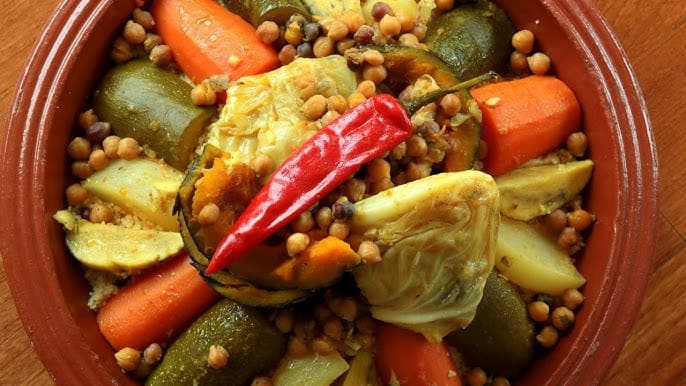
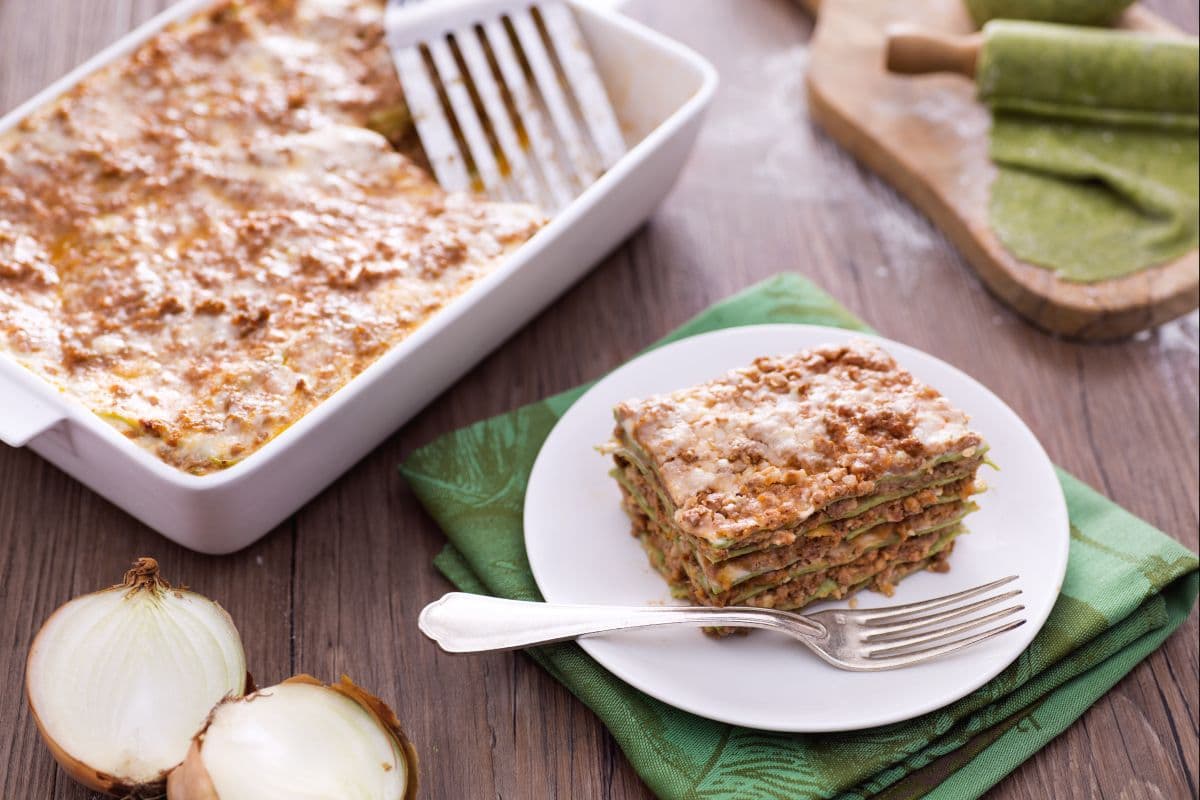
This insight has practical implications for anyone cooking for a family. It means that the cook's job is not to make separate "kid food" and "adult food" but to build meals with enough range that everyone finds something to eat. A large tagine of seven vegetables served over couscous, for instance, offers starch, protein, and a variety of textures and flavors — a child can eat the couscous and chickpeas while an adult appreciates the depth of the spiced broth. A lasagna verde alla bolognese buries its vegetables in layers of pasta, ragù, and béchamel, making them palatable even to the most skeptical young eater. The strategy is not deception but design — structuring meals so that participation is easy and rejection is unnecessary.

Michael Pollan, whose writing on food systems and cooking culture has shaped public discourse for two decades, makes a complementary argument in "Cooked." Pollan contends that the decline of home cooking is not merely a nutritional problem but a social one. When families stop cooking, they lose a daily practice of cooperation, planning, and shared labor that no other household activity replaces. The meal is the last ritual that gathers the household in one place at one time, and the cooking is the labor that gives that ritual its structure. Pollan is not nostalgic about this — he acknowledges that the burden of cooking has fallen disproportionately on women and that convenience foods addressed real problems of time and exhaustion. But he argues that the solution is not to abandon cooking but to distribute it more equitably and to recognize it as a form of care that deserves time, respect, and resources.
The private chef occupies an unusual position in this landscape. Hired by families who have the resources to outsource cooking but not the desire to eat restaurant food every night, the private chef must reconcile professional technique with domestic reality. The mise en place of a professional kitchen — the labeled containers, the precise timing, the silent efficiency — meets the chaos of a household where the baby is screaming, the teenager is late for practice, and the client just texted that two more people are coming for dinner. Adaptability, not precision, becomes the defining skill.
Portion psychology is another dimension that separates family cooking from restaurant cooking. In a restaurant, portions are controlled to the gram. At a family table, the dynamics are different. Research in behavioral economics, notably the work of Brian Wansink at the Cornell Food and Brand Lab (before his methodological controversies), consistently found that people eat more when served family-style from shared platters. This is not necessarily a problem — shared platters encourage social eating, reduce waste, and allow individuals to self-regulate — but it requires the cook to think about quantity differently. Cooking for six means cooking enough for eight, because a teenage boy will eat two servings and the leftovers will become tomorrow's lunch.

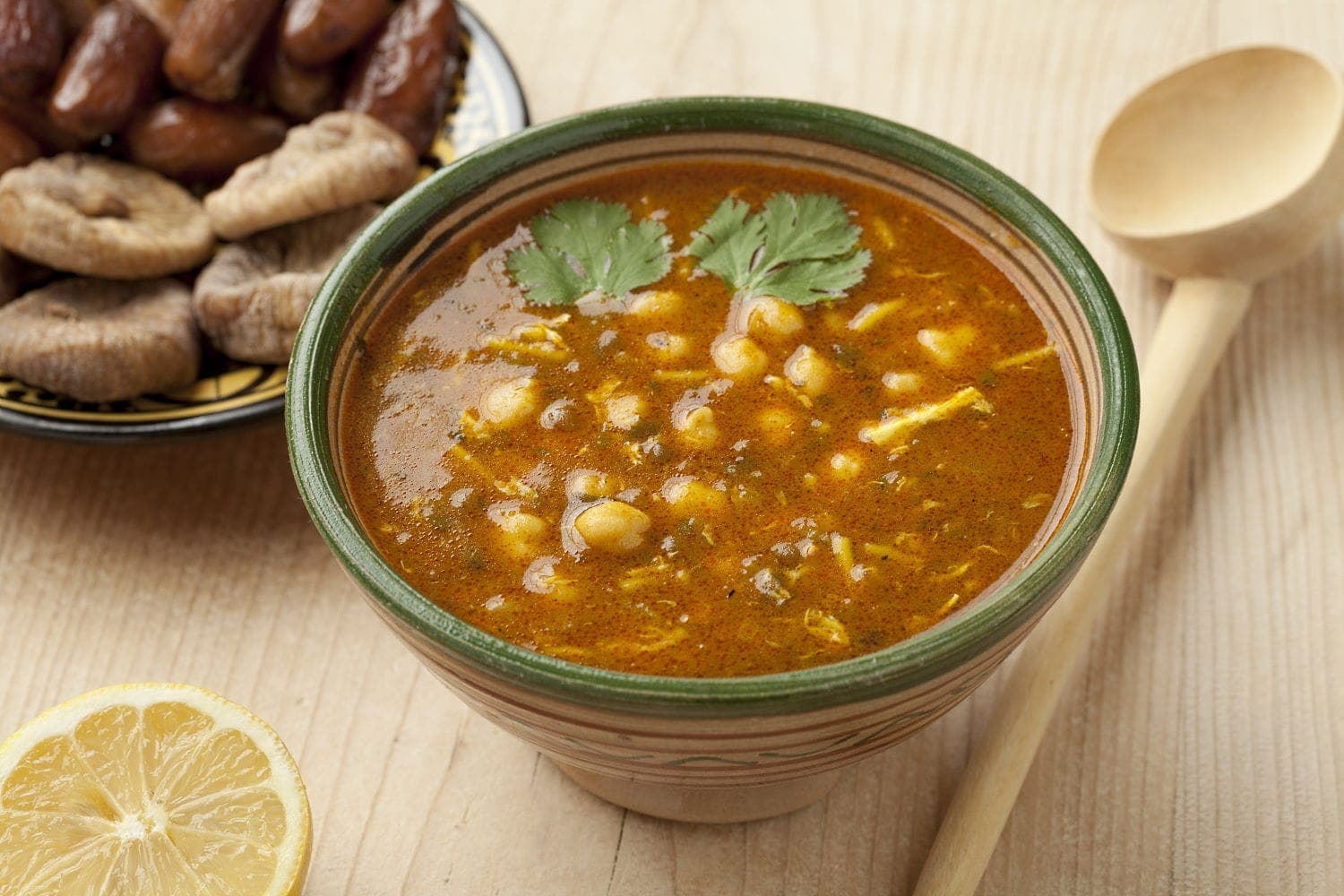
Cultural differences in family meal structure are vast and instructive. In Morocco, the communal meal is a cornerstone of daily life. The harira soup served at sunset during Ramadan is not merely food but a collective act of breaking fast, shared across class and regional lines. The family gathers around a single large dish, eating with bread from a common platter. In Italy, the structure is sequential — antipasto, primo, secondo, contorno, dolce — but the spirit is the same: food as a framework for togetherness, with the kitchen as the gravitational center of the household. In the United States, the family meal is more contested, more fragmented, and more frequently replaced by individual grazing. Fishel's research suggests that this fragmentation has measurable costs.
The practical challenge for any cook — professional or amateur — is to make the family meal sustainable. Not a nightly performance, not a source of stress, but a routine that can be maintained five or six nights a week across months and years. This requires a repertoire: thirty to forty dishes that can be rotated, adapted, and simplified as needed. It requires strategic shopping and the willingness to cook in bulk when time allows. It requires the humility to serve rice and beans on Monday and reserve the bouillabaisse for Saturday. And it requires an understanding that the perfect is the enemy of the consistent — that a mediocre Tuesday dinner eaten together is worth more than a spectacular Saturday dinner eaten alone.
The family table is not glamorous. It does not photograph well for social media. It does not earn Michelin stars or James Beard nominations. But it is, by every metric that matters — health, happiness, connection, the slow education of young palates — the most important place a cook can work. The silence that falls when the food is right is not silence at all. It is the sound of a household functioning as it should.
— More to read

— 10 Minute · Article
Ramadan at the Table: The Foods That Break the Fast
When the sun sets during the holy month, the first bite is never random. Across the Muslim world, iftar follows a structure as precise as the fast itself, shaped by centuries of nutritional wisdom, religious practice, and culinary tradition.

— 10 Minute · Article
Liquid Gold: What Most People Get Wrong About Olive Oil
The bottle in your pantry is almost certainly not what it claims to be. The olive oil industry is plagued by fraud, misunderstanding, and a chemical complexity that most consumers never encounter. Here is what actually matters.

— 11 Minute · Article
The Tagine: A Vessel Shaped by Centuries
Long before Dutch ovens or pressure cookers, Berber cooks in North Africa perfected a conical clay vessel that turns scarce water and low heat into extraordinary depth of flavor — and modern food science is only now explaining why.

— 12 Minute · Article
Preserved Lemons — The Science, the Tradition, and the Three Weeks That Change Everything
Salt, citrus, time. Inside the Moroccan pantry staple that food scientists and chefs across three continents consider irreplaceable.

— 14 Minute · Article
The Lobster Chapter — From Trap to Table on the New England Coast
How a cold-water crustacean became the centerpiece of New England identity — and what most people still get wrong about cooking it.

— 9 Minute · Article
The Private Chef Question: What Happens When Dinner Is the Event
Private dining is booming. But the shift from restaurant kitchen to someone's home changes everything — the menu, the service, the relationship between chef and guest. Inside the quiet rise of dinner as experience.

— 9 Minute · Article
French Technique, Moroccan Soul: Where Two Traditions Meet
Confit and m'chermel. Roux and smen. Braise and tagine. The culinary overlap between France and Morocco runs deeper than colonial history — it is a conversation between two of the world's great kitchen traditions.

— 9 Minute · Article
The Table Is the Thing: Why Setting Matters as Much as Cooking
A perfectly cooked dish served on the wrong plate, in the wrong light, at the wrong height, loses something essential. The art of table setting is not decoration — it is the final act of cooking.

— 9 Minute · Article
Sourcing in New England: A Chef's Guide to the Local Supply Chain
Between the Boston Fish Pier and the winter CSA box, New England's food supply chain is more complex — and more fragile — than most diners realize. A practical look at what local actually means.

— 8 Minute · Article
The Grandmother Test: When a Recipe Is Actually Done
She never set a timer. She listened to the tagine, pressed the dough, smelled the bread. The unwritten knowledge of grandmothers is the most valuable — and most endangered — form of culinary intelligence.