
June 10, 2026

— 9 Minute · June 10, 2026
Pasta When Nobody's Watching: The Art of Cooking for Yourself
The dishes chefs actually cook at home bear almost no resemblance to the ones they serve to paying guests. Alone in the kitchen at midnight, with no audience and no expectations, the pasta that emerges is something purer and more honest than anything on a tasting menu.
There is a particular silence in a kitchen at midnight. The dishwasher is not running. No timer is beeping. No one is calling for a pickup on table four. The refrigerator hums its low, constant note, and a pot of water is coming to a boil with the unhurried patience of water that knows it has no deadline. This is the hour of the solo cook, and the dish is almost always pasta.
The phenomenon is so universal among professional cooks that it has become something of a cliche, but cliches persist because they describe real things. Chefs cook pasta for themselves. Not the architectural, tweezered, microgreen-garnished pasta of the tasting menu, but the stripped-down, late-night, standing-at-the-counter pasta that exists entirely outside the performance of professional cooking. It is pasta without an audience, and it is fundamentally different from pasta with one.
Marcella Hazan, the woman who did more than any other single writer to bring authentic Italian home cooking to the English-speaking world, understood this distinction intuitively. Her recipes, collected across decades of teaching and writing from her apartment in New York and her home in Venice, were never about spectacle. They were about the application of sound technique to good ingredients with a minimum of interference. Her famous tomato sauce, the one made with nothing but canned tomatoes, butter, and a halved onion simmered for forty-five minutes, is perhaps the ultimate expression of this philosophy. It contains three ingredients. It takes no skill. It is perfect.

Hazan's work represents one end of the solo pasta spectrum: the deeply considered simplicity that comes from knowing exactly what you want and refusing to add anything that does not serve that vision. At the other end sits the improvised, use-what-you-have, rummage-through-the-refrigerator pasta that has its own kind of integrity. Both share a defining characteristic: the absence of the need to impress.
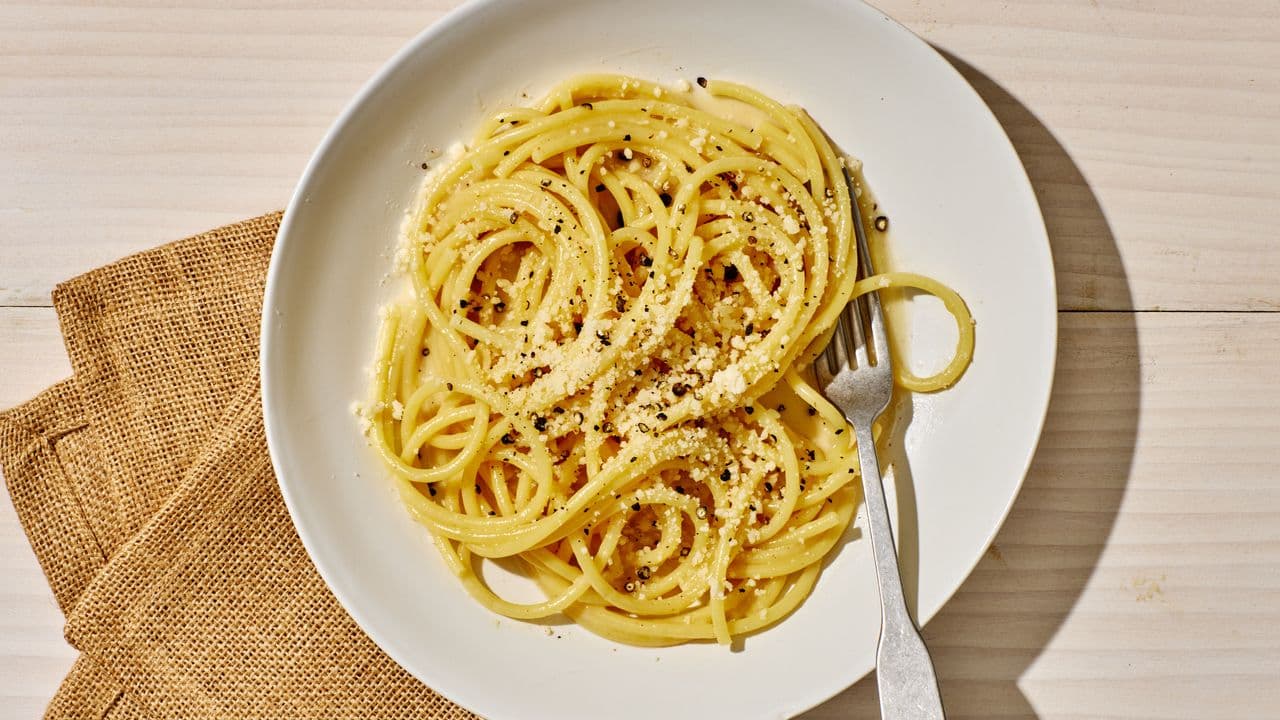
Cacio e pepe, the Roman dish of pasta with Pecorino Romano cheese and black pepper, is perhaps the purest example of midnight pasta elevated to canonical status. It contains five elements: pasta, water, cheese, pepper, and technique. There is no sauce in the conventional sense. The sauce is created in the pan by emulsifying the starchy pasta cooking water with the grated cheese, producing a creamy, clinging coating that is entirely a function of temperature control and timing. Get it right, and the result is an impossibly silky, sharp, peppery bowl that satisfies at a level disproportionate to its simplicity. Get it wrong, and the cheese clumps into rubbery lumps in a pool of greasy water.
Massimo Bottura, the chef of Osteria Francescana in Modena, a restaurant that has been named the best in the world, has spoken with unusual candor about the gap between professional cooking and private cooking. In interviews and in his memoir, Bottura has described coming home after service and making himself a simple pasta, sometimes nothing more than spaghetti aglio e olio, the garlic and oil preparation that is to Italian cooking what breathing is to living. His point, made repeatedly, is that simplicity is not a compromise but a destination. The greatest cooks in the world do not cook elaborately for themselves because they understand, perhaps better than anyone, that elaborate cooking is a response to an audience. Remove the audience, and what remains is the purest expression of appetite and skill.
Rachel Roddy, the British food writer who has lived in Rome's Testaccio neighborhood for over a decade and whose book An A-Z of Pasta provides an intimate, almost anthropological catalog of the pasta traditions she has absorbed through daily practice, writes about solo cooking with a specificity that makes it vivid. In her telling, the solo pasta is not just a meal but a practice, a daily recalibration of the senses. She describes the satisfaction of getting the pasta water salted correctly, of judging the doneness by feel rather than timer, of knowing the exact moment to toss the drained spaghetti into a pan of garlic sizzling in olive oil. These are not skills acquired for professional application. They are skills acquired for personal sustenance, and they carry a different kind of mastery.
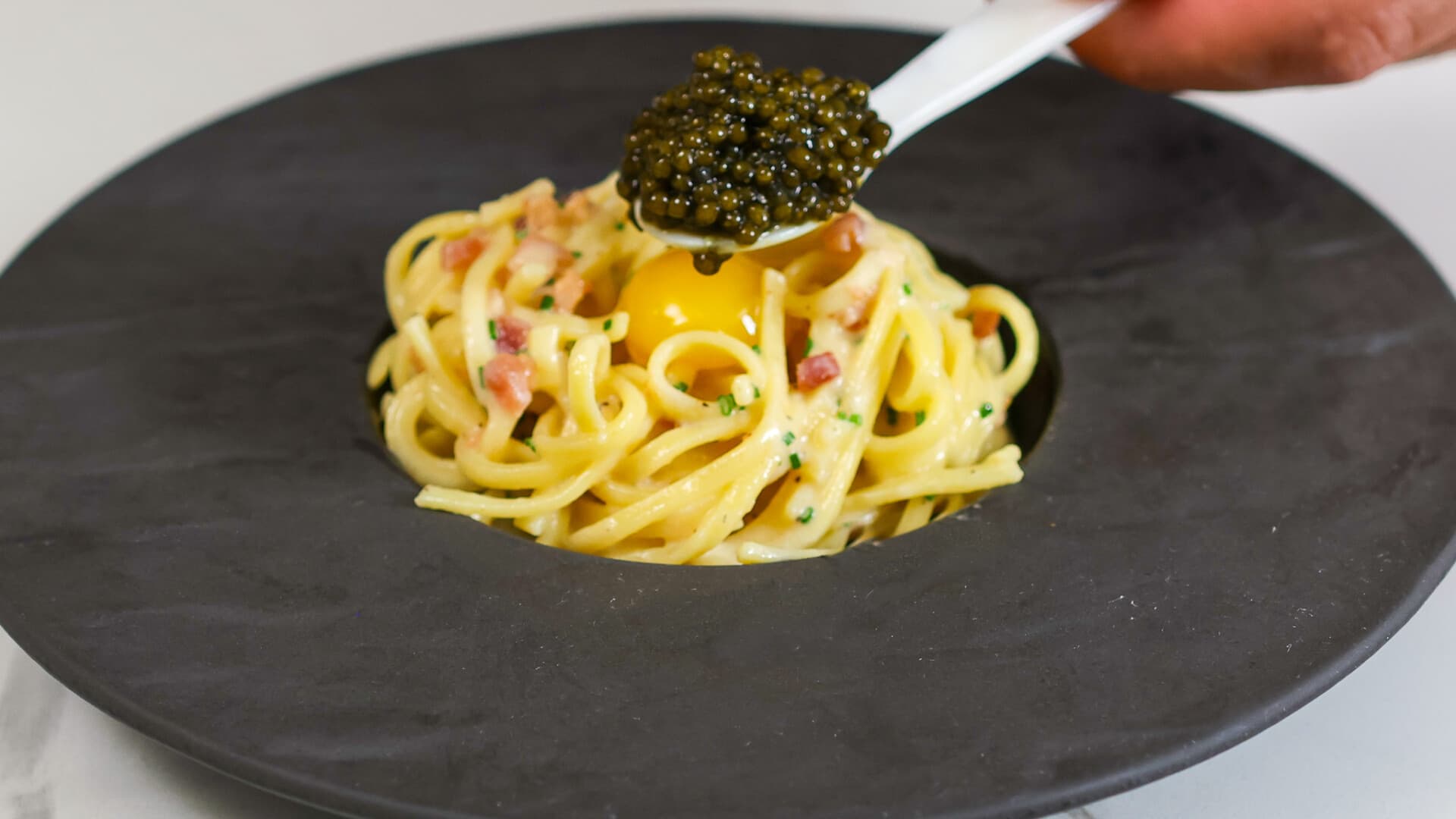
The ingredients for a great midnight pasta are almost comically modest. A package of dried spaghetti or rigatoni from a decent Italian producer. A chunk of Parmigiano-Reggiano or Pecorino Romano. Garlic. Olive oil. Black pepper. Maybe a tin of anchovies. Maybe a handful of cherry tomatoes. Maybe an egg and some guanciale, if the pantry is feeling generous and a carbonara is in order. The total cost is trivial. The total preparation time is the twelve minutes it takes to boil a pot of pasta. The total effort is barely more than assembling a sandwich.
And yet the result, when executed with care, can be transcendent. This is the paradox that Italian cooking has always understood and that other cuisines are slower to accept: simplicity is not the absence of skill but its most demanding application. When there are only three or four ingredients on the plate, there is nowhere for mediocrity to hide. The quality of the cheese matters absolutely. The point at which the garlic transitions from fragrant to burnt matters absolutely. The amount of starchy pasta water used to build the emulsion matters absolutely. Every variable is exposed.

There is a philosophical dimension to solo cooking that extends beyond the technical. Cooking for oneself is an act of self-care that modern life has largely outsourced. The delivery app, the frozen meal, the meal kit, the protein bar eaten over the sink: these are the solutions that efficiency proposes to the problem of feeding a single person. They are not bad solutions. They keep people alive and reasonably nourished. But they are solutions that treat eating as a problem to be solved rather than an experience to be had.
The midnight pasta resists this framing. It insists that the act of cooking, even for an audience of one, even at an hour when no one would judge you for ordering takeout, has intrinsic value. The value is not nutritional, though a bowl of pasta with good olive oil and cheese is nutritionally reasonable. The value is in the practice itself: the engagement of the senses, the brief period of focused attention, the smell of garlic hitting hot oil, the sound of water at a rolling boil, the feel of the pasta testing tender between the teeth.
Bottura has made the observation that cooking for yourself is the most honest cooking there is, because the feedback loop is immediate and unjudgeable. There is no critic, no diner, no Instagram audience. There is only the cook and the bowl. If the pasta is undersalted, the cook knows it. If the carbonara broke because the pan was too hot, the cook knows it. If it is perfect, the cook knows that too, and the knowledge is entirely private, a small satisfaction that requires no external validation.
The pasta dishes that chefs cook at home share certain qualities. They are fast, because a cook who has been on their feet for twelve hours is not going to spend another two on dinner. They are simple, because the mental energy required for complex preparation has already been spent. They are satisfying in a deep, carbohydrate-rich, warming way that addresses the body's actual needs rather than its aesthetic aspirations. And they are, almost without exception, better than they have any right to be, because the person making them has spent years developing a sensitivity to heat, seasoning, and timing that elevates even the most basic preparation.
Roddy captures this best when she writes about the specific pleasure of eating pasta alone, standing in the kitchen, straight from the pan, with no plating and no pretense. It is the antithesis of restaurant cooking, and for many chefs, it is the reason they started cooking in the first place: not to impress, not to perform, but to make something good to eat and then eat it. The midnight pasta, in all its humble, unadorned glory, is a reminder that cooking at its most essential is not about the audience. It is about the food.
— More to read

— 10 Minute · Article
Ramadan at the Table: The Foods That Break the Fast
When the sun sets during the holy month, the first bite is never random. Across the Muslim world, iftar follows a structure as precise as the fast itself, shaped by centuries of nutritional wisdom, religious practice, and culinary tradition.

— 10 Minute · Article
Liquid Gold: What Most People Get Wrong About Olive Oil
The bottle in your pantry is almost certainly not what it claims to be. The olive oil industry is plagued by fraud, misunderstanding, and a chemical complexity that most consumers never encounter. Here is what actually matters.

— 11 Minute · Article
The Tagine: A Vessel Shaped by Centuries
Long before Dutch ovens or pressure cookers, Berber cooks in North Africa perfected a conical clay vessel that turns scarce water and low heat into extraordinary depth of flavor — and modern food science is only now explaining why.

— 12 Minute · Article
Preserved Lemons — The Science, the Tradition, and the Three Weeks That Change Everything
Salt, citrus, time. Inside the Moroccan pantry staple that food scientists and chefs across three continents consider irreplaceable.

— 14 Minute · Article
The Lobster Chapter — From Trap to Table on the New England Coast
How a cold-water crustacean became the centerpiece of New England identity — and what most people still get wrong about cooking it.

— 9 Minute · Article
The Private Chef Question: What Happens When Dinner Is the Event
Private dining is booming. But the shift from restaurant kitchen to someone's home changes everything — the menu, the service, the relationship between chef and guest. Inside the quiet rise of dinner as experience.

— 9 Minute · Article
French Technique, Moroccan Soul: Where Two Traditions Meet
Confit and m'chermel. Roux and smen. Braise and tagine. The culinary overlap between France and Morocco runs deeper than colonial history — it is a conversation between two of the world's great kitchen traditions.

— 9 Minute · Article
The Table Is the Thing: Why Setting Matters as Much as Cooking
A perfectly cooked dish served on the wrong plate, in the wrong light, at the wrong height, loses something essential. The art of table setting is not decoration — it is the final act of cooking.

— 9 Minute · Article
Sourcing in New England: A Chef's Guide to the Local Supply Chain
Between the Boston Fish Pier and the winter CSA box, New England's food supply chain is more complex — and more fragile — than most diners realize. A practical look at what local actually means.

— 8 Minute · Article
The Grandmother Test: When a Recipe Is Actually Done
She never set a timer. She listened to the tagine, pressed the dough, smelled the bread. The unwritten knowledge of grandmothers is the most valuable — and most endangered — form of culinary intelligence.