
May 27, 2026

— 10 Minute · May 27, 2026
The Braise: Why Patience Is the Only Technique That Matters
Braising asks almost nothing of the cook except the one thing modern life makes hardest to give: time. In return, it transforms the cheapest, toughest cuts into something extraordinary. The science explains why. The philosophy explains why it matters.
There is no technique in the cook's repertoire that delivers a higher return on investment than braising. The input is cheap: a tough, sinewy cut of meat that a butcher might practically give away, a few aromatics, some liquid, and a heavy pot with a lid. The process requires no precision knife work, no split-second timing, no expensive equipment. What it requires, the only thing it truly demands, is time. And this, in a culture that has optimized every other aspect of cooking for speed, is precisely what makes braising feel almost radical.
Harold McGee, the chemist and food science writer whose work On Food and Cooking has served as the field's reference text for four decades, explains the underlying transformation in molecular terms. The toughness of a working muscle, the kind found in shoulders, shanks, necks, and cheeks, comes from collagen, the connective tissue protein that wraps and binds muscle fibers. Collagen is extraordinarily strong. It is, after all, the structural material that holds animals together. In a young, tender cut from a lightly used muscle, there is relatively little of it. In a hard-working shank or shoulder, there is a great deal, and no amount of quick, high-heat cooking will make it tender. Grilling a beef shank to medium-rare produces something approximately as pleasant to eat as a rubber band.

But collagen has a weakness. At temperatures above roughly 160 degrees Fahrenheit, sustained over time, it begins to unravel. The triple-helix structure of the protein breaks apart, and the collagen converts into gelatin, a substance with radically different properties. Where collagen was tough and resistant, gelatin is soft, slippery, and capable of holding moisture. Where collagen made meat chewy and unpleasant, gelatin makes it succulent and tender, producing that distinctive sensation where the fibers separate at the slightest pressure of a fork. The braising liquid itself, enriched with dissolved gelatin, develops a body and richness that no amount of added fat can replicate.
This conversion is not instantaneous. McGee notes that it follows a time-temperature curve: higher temperatures accelerate the process, but they also drive more moisture out of the muscle fibers themselves, which can make the meat stringy and dry even as the collagen dissolves. The optimal braising temperature sits in a relatively narrow band, roughly 180 to 200 degrees Fahrenheit in the liquid surrounding the meat, which corresponds to an oven temperature of about 300 to 325 degrees. At these temperatures, the collagen converts steadily and the muscle fibers lose moisture slowly enough that the gelatin can compensate, keeping the overall perception one of tenderness and juiciness.
J. Kenji Lopez-Alt, in The Food Lab, dedicated considerable space to testing these variables empirically. His experiments with braised short ribs confirmed what McGee's science predicted: braising at too high a temperature, even if the total cooking time was the same, produced drier, more fibrous results. The sweet spot was low and slow, a phrase that has become something of a mantra in the braising world but is backed by solid thermodynamic reasoning. Lopez-Alt also demonstrated that the braising liquid matters less than most recipes suggest. Whether the pot contains red wine, beer, stock, or even water, the primary transformation is happening inside the meat itself. The liquid's role is to provide a humid environment, prevent the bottom of the pot from scorching, and contribute flavor to the sauce that will eventually accompany the dish.

The Maillard reaction, that other pillar of meat cookery, plays its role before the liquid ever enters the pot. The initial searing of the meat, browning it aggressively on all sides in a hot pan with oil, creates hundreds of new flavor compounds through the reaction between amino acids and reducing sugars at high temperatures. This step is non-negotiable. A braise that skips the sear will taste flat and one-dimensional compared to one that begins with a hard brown crust on every exposed surface. The fond, the dark residue left in the pan after searing, is liquid gold. Deglazing it with wine or stock lifts those flavors into the braising liquid, where they concentrate over the hours that follow.
Thomas Keller, in his writings on the techniques behind the French Laundry, has described braising as the most forgiving of all cooking methods and the one that best rewards repetition. Unlike a sauteed piece of fish, which can go from perfect to overcooked in thirty seconds, a braise has a wide window of success. The difference between a three-hour and a four-hour braise is usually the difference between tender and more tender. The margin for error is enormous, which makes braising the ideal technique for home cooks who cannot hover over the stove with a probe thermometer and a stopwatch.
But Keller also emphasizes that forgiving does not mean thoughtless. The details matter in aggregate. The choice of aromatics layered into the pot: onions, carrots, celery, garlic, herbs, spices. The quality of the liquid. The degree to which the meat was dried before searing, since surface moisture is the enemy of Maillard browning. The tightness of the lid, since too much evaporation concentrates flavors but also risks drying out the dish. Each of these decisions is small, but they compound over a three-hour cook into the difference between a competent braise and a revelatory one.

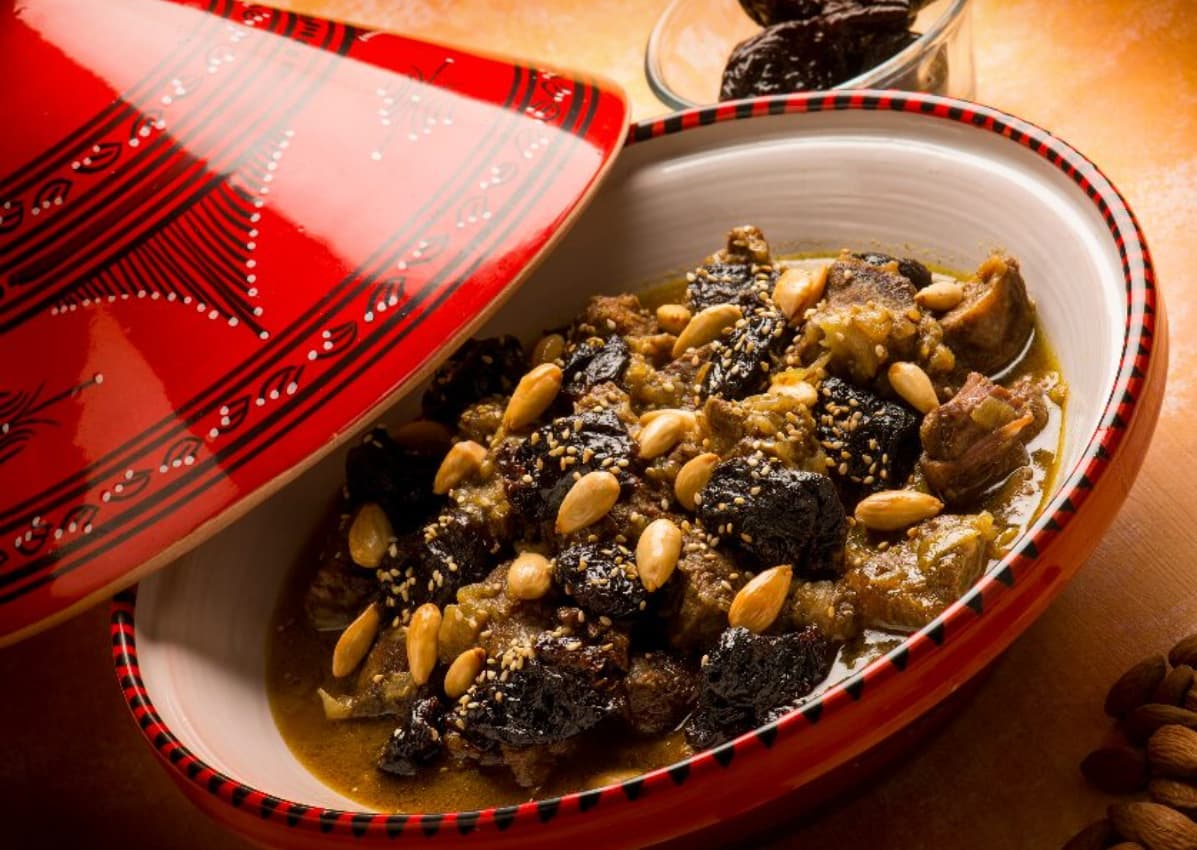
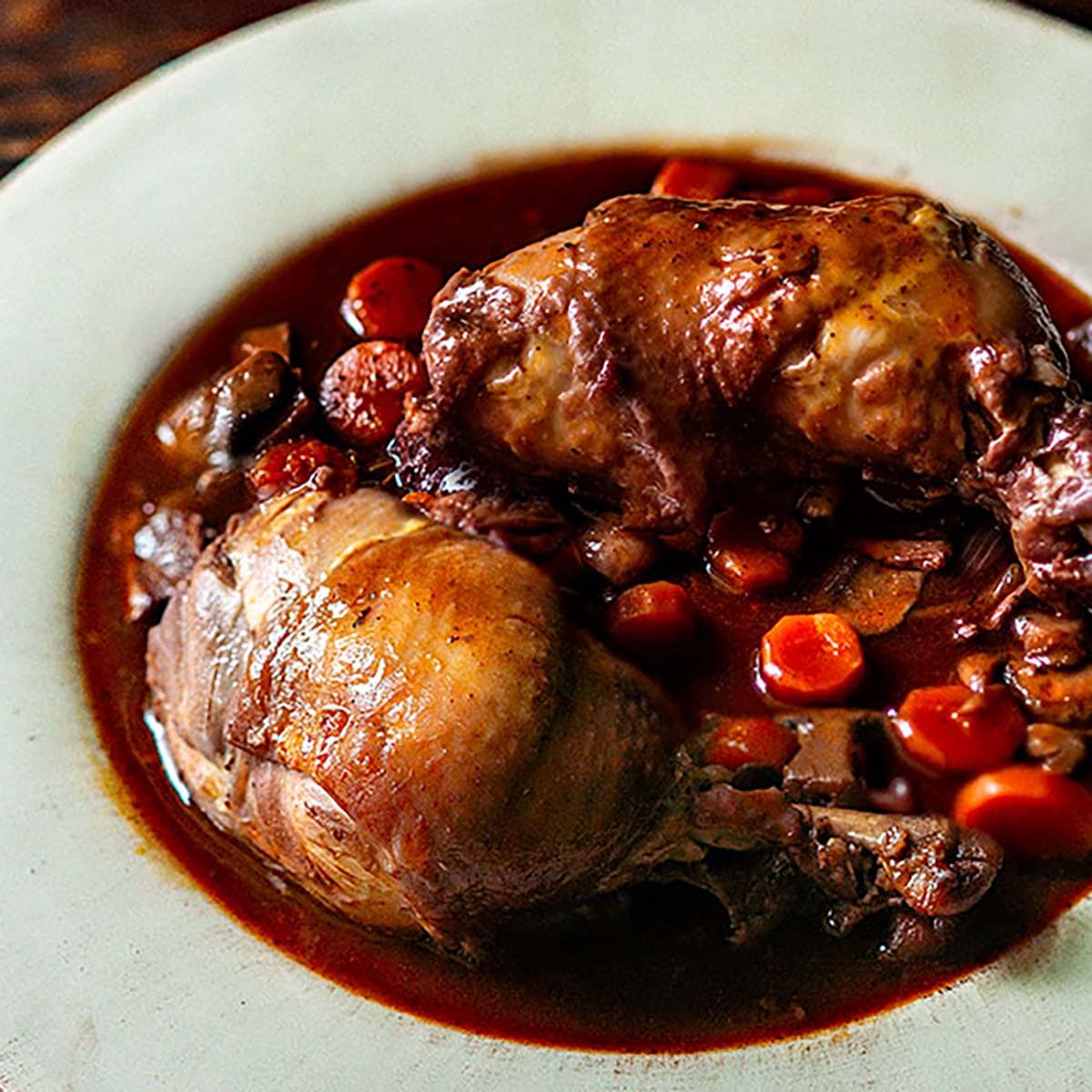
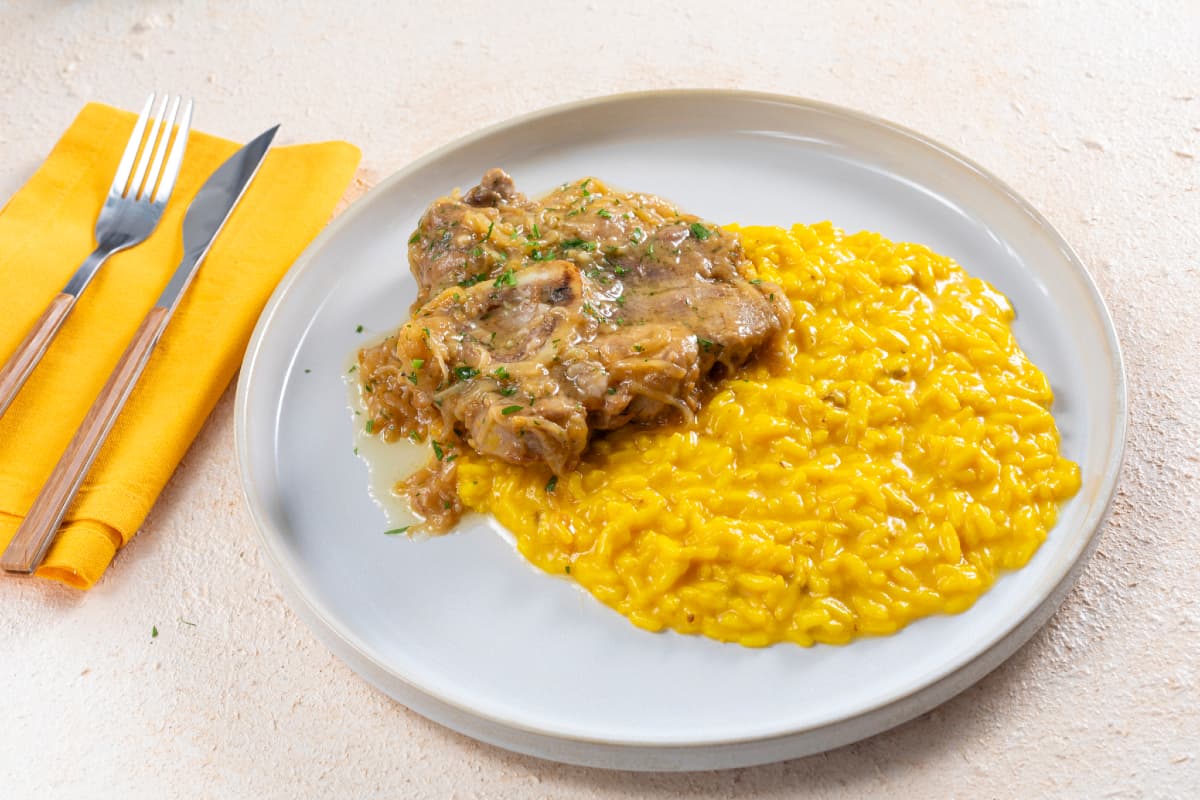
The world's great braised dishes reflect this universal technique filtered through local ingredients and traditions. France contributes coq au vin, the Burgundian benchmark where a rooster, historically a tough old bird past its egg-laying prime, is braised in red wine with lardons, mushrooms, and pearl onions until the meat falls from the bone and the sauce achieves a concentrated, almost syrupy depth. Italy offers osso buco, the Milanese specialty of cross-cut veal shanks braised with white wine, broth, and a soffritto of onion, carrot, and celery, finished with gremolata, the bright mixture of lemon zest, garlic, and parsley that cuts through the richness. Morocco brings the tagine, where lamb shoulders or shanks braise low and slow with preserved lemons, olives, saffron, and ginger in the conical clay pot whose shape traps and recirculates steam, creating an environment so gentle and humid that the meat practically melts.
What unites these dishes is not just technique but philosophy. Braising is peasant cooking elevated by patience. The cuts it uses, the ones that demand long cooking, are the ones that wealthier diners historically rejected in favor of tender loins and racks. Braising emerged from necessity: the need to render edible and delicious the parts of the animal that quick cooking could not save. In this sense, it is the most democratic of techniques, the one that proves that flavor and luxury do not depend on the cost of the raw material but on the intelligence of the method.
There is also a rhythm to braising that rewards the home cook in ways that transcend the plate. Once the searing is done and the pot is in the oven, the work is over. The house fills slowly with a fragrance that deepens over hours, a smell that is primal and comforting in a way that no other cooking method produces. The cook is free to read, to clean, to do nothing at all. The dish is cooking itself, and the only remaining task is to not interfere.
This is the paradox that makes braising both ancient and countercultural. In an era that has given us the Instant Pot, the thirty-minute meal, and the meal kit delivered to the door, braising insists on duration. It cannot be meaningfully accelerated. A pressure cooker can reduce the time, yes, but the texture and flavor development are not identical. The long, slow conversion of collagen to gelatin, the gradual concentration of flavors in the braising liquid, the way the aromatics soften and dissolve into the sauce, all of these processes benefit from real time in a way that resists compression.
Lopez-Alt has written that braising rewards making the dish a day ahead, refrigerating it overnight, and reheating it the following day. The resting period allows flavors to meld and intensify. The chilled fat solidifies on the surface and can be lifted off cleanly, leaving a sauce that is rich without being greasy. The reheated braise is, by nearly universal consensus among chefs, better than the freshly made version. Time improves it even after the cooking is done.
Braising, in the end, is a lesson in trust. Trust that the meat will yield. Trust that the liquid will concentrate. Trust that the alchemy of heat, moisture, and time will do what it has done for every generation of cooks before this one. The technique asks almost nothing of the cook except the willingness to wait. And waiting, it turns out, is the only technique that truly matters.
— More to read

— 10 Minute · Article
Ramadan at the Table: The Foods That Break the Fast
When the sun sets during the holy month, the first bite is never random. Across the Muslim world, iftar follows a structure as precise as the fast itself, shaped by centuries of nutritional wisdom, religious practice, and culinary tradition.

— 10 Minute · Article
Liquid Gold: What Most People Get Wrong About Olive Oil
The bottle in your pantry is almost certainly not what it claims to be. The olive oil industry is plagued by fraud, misunderstanding, and a chemical complexity that most consumers never encounter. Here is what actually matters.

— 11 Minute · Article
The Tagine: A Vessel Shaped by Centuries
Long before Dutch ovens or pressure cookers, Berber cooks in North Africa perfected a conical clay vessel that turns scarce water and low heat into extraordinary depth of flavor — and modern food science is only now explaining why.

— 12 Minute · Article
Preserved Lemons — The Science, the Tradition, and the Three Weeks That Change Everything
Salt, citrus, time. Inside the Moroccan pantry staple that food scientists and chefs across three continents consider irreplaceable.

— 14 Minute · Article
The Lobster Chapter — From Trap to Table on the New England Coast
How a cold-water crustacean became the centerpiece of New England identity — and what most people still get wrong about cooking it.

— 9 Minute · Article
The Private Chef Question: What Happens When Dinner Is the Event
Private dining is booming. But the shift from restaurant kitchen to someone's home changes everything — the menu, the service, the relationship between chef and guest. Inside the quiet rise of dinner as experience.

— 9 Minute · Article
French Technique, Moroccan Soul: Where Two Traditions Meet
Confit and m'chermel. Roux and smen. Braise and tagine. The culinary overlap between France and Morocco runs deeper than colonial history — it is a conversation between two of the world's great kitchen traditions.

— 9 Minute · Article
The Table Is the Thing: Why Setting Matters as Much as Cooking
A perfectly cooked dish served on the wrong plate, in the wrong light, at the wrong height, loses something essential. The art of table setting is not decoration — it is the final act of cooking.

— 9 Minute · Article
Sourcing in New England: A Chef's Guide to the Local Supply Chain
Between the Boston Fish Pier and the winter CSA box, New England's food supply chain is more complex — and more fragile — than most diners realize. A practical look at what local actually means.

— 8 Minute · Article
The Grandmother Test: When a Recipe Is Actually Done
She never set a timer. She listened to the tagine, pressed the dough, smelled the bread. The unwritten knowledge of grandmothers is the most valuable — and most endangered — form of culinary intelligence.