
April 29, 2026

— 12 Minute · April 29, 2026
The Sear and the Sea: A Guide to Scallops
A perfectly seared scallop is one of the simplest and most revealing tests of a cook's skill — three minutes of high heat that expose whether you understand your protein, your pan, and the Maillard reaction itself.
The Atlantic sea scallop (Placopecten magellanicus) is one of the most valuable fisheries in the United States, and one of the most misunderstood ingredients in the American kitchen. Each year, the New Bedford, Massachusetts scallop fleet — the largest in the nation — lands tens of millions of pounds of scallops from the Georges Bank and Mid-Atlantic grounds. The fleet's catch is worth hundreds of millions of dollars annually, making New Bedford the highest-grossing fishing port in America by dollar value for over two decades running. Yet most home cooks, confronted with a pound of scallops at the fish counter, commit the same handful of errors that transform a sublime ingredient into a rubbery, steamed disappointment.
The first and most consequential decision happens at the point of purchase: dry-packed versus wet-packed. This distinction, invisible to the uninitiated, determines the outcome of everything that follows. Wet-packed scallops have been treated with sodium tripolyphosphate (STP), a chemical that causes the scallop to absorb water, increasing its weight by as much as 30 percent. The scallop appears plump and glossy, but it is bloated with retained liquid. When this scallop hits a hot pan, the water bleeds out, dropping the pan temperature below the threshold for the Maillard reaction. Instead of searing, the scallop steams in its own expelled liquid, developing a pale, flabby exterior and a texture that food writer Mark Bittman, in his landmark book "How to Cook Everything," memorably compared to erasers.

Dry-packed scallops, by contrast, are untreated — shucked and sold without chemical processing. They are slightly less plump, more ivory or pinkish in color (STP-treated scallops tend toward stark white), and significantly more expensive. But they sear. The surface moisture is minimal, meaning the pan stays hot, and the Maillard reaction proceeds as it should, producing a mahogany-brown crust of extraordinary flavor.
The Maillard reaction itself, first described by French chemist Louis-Camille Maillard in 1912 and later elaborated in depth by Harold McGee in "On Food and Cooking," is a cascade of chemical transformations between amino acids and reducing sugars that occurs at temperatures above roughly 285 degrees Fahrenheit. On a scallop, which is high in protein and contains glycogen (a sugar stored in muscle tissue), the reaction produces hundreds of flavor compounds — nutty, caramelized, toasty, and faintly sweet. McGee notes that the glycogen content of scallops is unusually high compared to other shellfish, which is why a properly seared scallop develops a crust that is sweeter and more complex than seared shrimp or lobster. The Maillard reaction is also why cast iron and stainless steel outperform nonstick pans for this application: the higher thermal mass of these materials maintains temperature better when cold protein is added.
The technique for searing scallops is deceptively simple. Pat the scallops dry with paper towels — this step is non-negotiable. Season with salt. Heat a heavy pan over high heat until a drop of water sizzles and evaporates on contact. Add a high-smoke-point fat (grapeseed oil, clarified butter, or a combination). Place the scallops in the pan with space between them — crowding drops the temperature and induces steaming. Do not move them. After two to two and a half minutes, the bottom should have developed a deep golden-brown crust. Flip once, cook for another ninety seconds to two minutes, and remove. The interior should be translucent, almost custard-like. Overcooking is the most common mistake after buying wet-packed scallops — the window between perfect and ruined is measured in seconds.

Beyond the pan, the story of the scallop is a story of fisheries management — one with more nuance and more success than many marine conservation narratives. Dr. Kevin Stokesbury, a professor at the University of Massachusetts Dartmouth's School for Marine Science and Technology (SMAST), developed the video survey methodology that revolutionized scallop stock assessment in the late 1990s. Before Stokesbury's work, scallop populations were estimated using dredge surveys — a method that was expensive, imprecise, and destructive to the seafloor. Stokesbury's team towed underwater cameras across the ocean bottom, producing high-resolution images that allowed researchers to count individual scallops and estimate population density with unprecedented accuracy.
The video survey data fed directly into NOAA's scallop management plan, which uses a rotational area management system. Specific areas of Georges Bank and the Mid-Atlantic are opened and closed to fishing on a rotating basis, allowing scallop populations to grow to maturity before harvest. The system has been, by most measures, remarkably successful. NOAA scallop survey data shows that the Atlantic sea scallop stock has been consistently above target biomass levels since the early 2000s, making it one of the best-managed fisheries in the world. This is a rare and welcome contrast to the familiar narrative of overfishing and decline.
Seasonality matters, though not in the way most consumers assume. Atlantic sea scallops are available year-round, but their quality peaks in late fall and winter, when glycogen content is highest and the meats are firmest. In spring and summer, scallops divert energy to spawning, and the meats can be softer, wetter, and less flavorful. Diver scallops — hand-harvested by divers rather than dredged from the bottom — are available more seasonally and are generally considered superior in quality, since the harvesting method is selective (divers choose large, mature scallops) and less damaging to the ocean floor.

Bay scallops (Argopecten irradians), the smaller, sweeter cousins of sea scallops, deserve separate mention. Harvested primarily from Nantucket, Martha's Vineyard, and Peconic Bay on Long Island, bay scallops have a short season (November through March) and a devoted following. They are too small and too delicate for searing — they are best eaten raw, lightly ceviche-d, or sauteed briefly in butter. Bittman has called them one of the finest seafoods in the American repertoire, and their scarcity and seasonality only add to their mystique.
The cultural significance of scallops extends beyond the American Northeast. In France, coquilles Saint-Jacques — named for the pilgrimage shell of Saint James — are a cornerstone of classical cuisine, often served in their shells with a gratin of cream, mushrooms, and breadcrumbs. In Japan, hotate (the Japanese scallop, Patinopecten yessoensis) is a staple of sushi bars and izakayas, prized for its sweetness when served raw. In each tradition, the scallop is valued for the same essential quality: a clean, sweet flavor that reflects the water it grew in.
For the home cook, the scallop is an ideal weeknight protein — fast, forgiving (within limits), and impressive out of all proportion to the effort involved. A plate of four well-seared sea scallops over a simple salad or beside a puree of cauliflower is a ten-minute meal that looks and tastes like a restaurant dish. The only requirements are good scallops (dry-packed, from a trusted source), a heavy pan, high heat, and the discipline to leave them alone while the Maillard reaction does its work.
That discipline — the willingness to wait, to trust the process, to resist the urge to fidget and flip — is, in the end, what separates a great scallop sear from a mediocre one. The pan does not need help. The protein knows what to do. The cook's job is to set the conditions and then step back. It is one of the simplest lessons in cooking, and one of the hardest to learn.
— More to read

— 10 Minute · Article
Ramadan at the Table: The Foods That Break the Fast
When the sun sets during the holy month, the first bite is never random. Across the Muslim world, iftar follows a structure as precise as the fast itself, shaped by centuries of nutritional wisdom, religious practice, and culinary tradition.

— 10 Minute · Article
Liquid Gold: What Most People Get Wrong About Olive Oil
The bottle in your pantry is almost certainly not what it claims to be. The olive oil industry is plagued by fraud, misunderstanding, and a chemical complexity that most consumers never encounter. Here is what actually matters.

— 11 Minute · Article
The Tagine: A Vessel Shaped by Centuries
Long before Dutch ovens or pressure cookers, Berber cooks in North Africa perfected a conical clay vessel that turns scarce water and low heat into extraordinary depth of flavor — and modern food science is only now explaining why.

— 12 Minute · Article
Preserved Lemons — The Science, the Tradition, and the Three Weeks That Change Everything
Salt, citrus, time. Inside the Moroccan pantry staple that food scientists and chefs across three continents consider irreplaceable.

— 14 Minute · Article
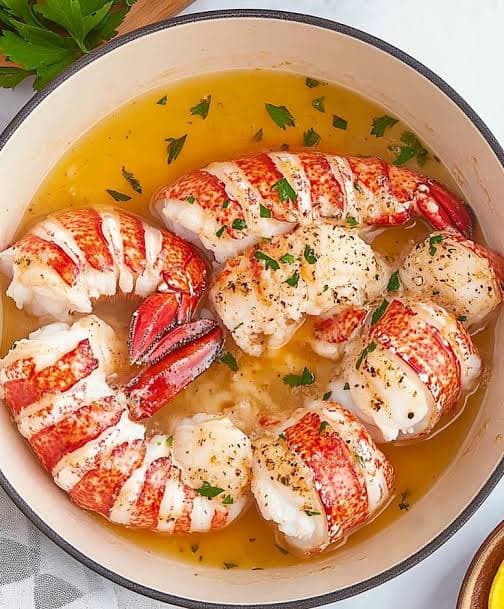
The Lobster Chapter — From Trap to Table on the New England Coast
How a cold-water crustacean became the centerpiece of New England identity — and what most people still get wrong about cooking it.

— 9 Minute · Article
The Private Chef Question: What Happens When Dinner Is the Event
Private dining is booming. But the shift from restaurant kitchen to someone's home changes everything — the menu, the service, the relationship between chef and guest. Inside the quiet rise of dinner as experience.

— 9 Minute · Article
French Technique, Moroccan Soul: Where Two Traditions Meet
Confit and m'chermel. Roux and smen. Braise and tagine. The culinary overlap between France and Morocco runs deeper than colonial history — it is a conversation between two of the world's great kitchen traditions.

— 9 Minute · Article
The Table Is the Thing: Why Setting Matters as Much as Cooking
A perfectly cooked dish served on the wrong plate, in the wrong light, at the wrong height, loses something essential. The art of table setting is not decoration — it is the final act of cooking.

— 9 Minute · Article
Sourcing in New England: A Chef's Guide to the Local Supply Chain
Between the Boston Fish Pier and the winter CSA box, New England's food supply chain is more complex — and more fragile — than most diners realize. A practical look at what local actually means.

— 8 Minute · Article
The Grandmother Test: When a Recipe Is Actually Done
She never set a timer. She listened to the tagine, pressed the dough, smelled the bread. The unwritten knowledge of grandmothers is the most valuable — and most endangered — form of culinary intelligence.